
In-the-Ear (ITE) Hearing Aids: Pros, Cons,Best Models (2026)
On
Written By
ITE hearing aids are custom-molded devices for mild to moderate hearing loss. They cost $1,000–$6,000 per pair. Top models include the Jabra ENHANCE PLUS (~$799–$999) and Phonak Virto P-312 (~$2,500–$3,500 per device). They are not recommended for severe to profound hearing loss.
What Are In-the-Ear (ITE) Hearing Aids?
In-the-ear (ITE) hearing aids are custom-molded devices that sit entirely within the outer ear, designed for adults with mild to moderate hearing loss who want discretion and a natural fit. All components — microphone, amplifier, and receiver — are housed in a single shell shaped precisely to your ear canal, making ITE aids the most cosmetically discreet prescription hearing aid style available. According to the WHO, 466 million people worldwide experience disabling hearing loss, and ITE aids are among the most commonly recommended solutions for the majority who have mild to moderate loss.
According to a report by the Hearing Loss Association of America, as of 2022, around 28.8 million adults in the United States could benefit from using hearing aids, with the majority experiencing mild to moderate hearing loss — exactly the range ITE devices are designed to address.
Is an ITE Hearing Aid Right for You?
Choose an ITE hearing aid if you:
- Have mild to moderate hearing loss
- Want a discreet device that is not visible behind the ear
- Prefer a device with user-adjustable controls on the shell
- Have good manual dexterity for daily insertion and removal
Consider a different style if you:
- Have severe to profound hearing loss (consider BTE or RIC)
- Have chronic ear infections or ear canal anomalies (consider BAHA)
- Have limited hand dexterity (consider larger BTE with easy controls)
Best ITE Hearing Aids
Jabra ENHANCE PLUS — Best Budget ITE
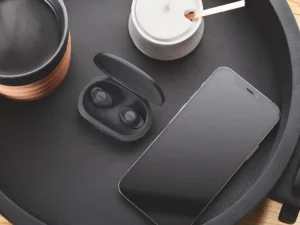
The Jabra ENHANCE PLUS is a premium in-the-ear OTC hearing aid priced at approximately $799–$999 per pair, making it one of the most affordable ITE options with medical-grade performance. It delivers up to 12 hours of battery life with a total of 35 hours from the charging case — comparable to prescription ITE models costing three times as much.
Best for: Adults with mild to moderate hearing loss who want streaming and hands-free calls without an audiologist appointment.
Specifications:
- Directional microphones and state-of-the-art signal processing
- Up to 12 hours battery; up to 35 hours total with charging case
- High-quality music streaming and hands-free calls
- Weight: 33.74 g / 1.19 oz
- Rechargeable Lithium-Ion battery: 3.7V, 129 mAh
Phonak Virto P-312 — Best Prescription ITE
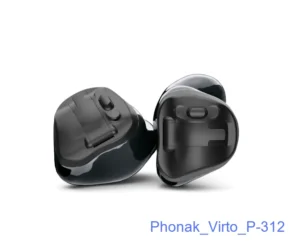
The Phonak Virto P-312 is a custom prescription ITE hearing aid priced at approximately $2,500–$3,500 per device, offering one of the most complete ITE feature sets available. It is custom-fitted by a licensed audiologist and includes advanced tinnitus and feedback management. [CHANGED]
Best for: First-time hearing aid users and people with tinnitus alongside mild to moderate hearing loss who want the most advanced ITE technology with audiologist support.
Specifications:
- Battery Size 312
- Push button (Program / Volume control)
- Directional microphone technology
- User Preference Tuning
- WhistleBlock (feedback cancellation)
- NoiseBlock (noise reduction)
- QuickSync (binaural coordination)
- Acoustically Optimized Vent
- TinnitusBalance (tinnitus masking)
- Auto Acclimatization
What Are the Pros and Cons of ITE Hearing Aids?
ITE hearing aids offer three main advantages: a discreet design that sits fully inside the ear, a custom-molded fit that provides natural sound quality, and user-friendly controls positioned within easy reach. Their main drawbacks are size-related — the small shell limits battery capacity and advanced features like directional microphones, and the deep placement in the ear canal increases earwax accumulation, requiring daily cleaning. ITE aids are generally not recommended for severe to profound hearing loss, where behind-the-ear (BTE) or receiver-in-canal (RIC) styles provide more amplification power. [CHANGED]
Pros:
- Discreet Design: Sits entirely within the outer ear — not visible behind the ear
- Customized Fit: Individually molded to the contours of your ear for comfort and acoustic performance
- Natural Sound Quality: Microphone and receiver positioned close to the ear canal mimic natural hearing
Cons:
- Limited Power and Features: Small size constrains battery capacity and advanced directional microphone systems
- Prone to Earwax Accumulation: Deep ear canal placement requires daily cleaning to maintain performance
- Limited Directionality: Advanced multi-directional microphone arrays are harder to fit in ITE shells
What Are the Components of an ITE Hearing Aid?
- Microphone: Captures external sounds and converts them to electrical signals. According to a study in the Journal of Auditory Technology, advances in microphone technology have significantly improved the signal-to-noise ratio in ITE devices, enhancing sound clarity.
- Amplifier: Processes and amplifies the signal based on the user’s hearing needs. Developments highlighted in the International Journal of Audiology emphasize adaptive algorithms in ITE amplifiers, offering real-time adjustments for varying listening environments.
- Receiver (Speaker): Delivers the amplified sound into the ear canal. Research in the Journal of Hearing Science underscores the role of precision-engineered receivers in achieving optimal sound output.
- Battery: ITE hearing aids commonly use disposable zinc-air batteries, known for energy density and longevity. According to the Hearing Review, zinc-air batteries offer higher energy capacity than other battery types. Dr. Michael Clarke (Journal of Hearing Technology) notes: “Zinc-air batteries strike a balance between compact size and high energy output, making them a preferred choice for in-the-ear hearing aids.”
How Do I Choose an ITE Hearing Aid?
Key factors from the Journal of Audiology:
- Degree of Hearing Loss: ITE devices are suitable for mild to moderate hearing loss. A thorough audiometric assessment is essential to confirm suitability before selecting a device.
- Lifestyle and Preferences: Daily activities and personal preferences determine the right features — connectivity options, control placement, and design style. Discuss lifestyle factors with your audiologist (source: Hearing Journal).
- Technological Features: Modern ITE aids offer noise reduction, Bluetooth connectivity, rechargeable options, and tinnitus masking. Match the feature set to your most frequent listening environments.
How Do You Wear and Fit an ITE Hearing Aid?
Insertion Technique: Gently pull the earlobe down and back, creating a straighter path for the device. Insert the hearing aid while slightly tilting it forward, ensuring a snug fit without discomfort.
Removal Technique: Grasp the device at the base and gently wiggle it out. Avoid abrupt movements to prevent damage to the hearing aid or the ear canal.
Acclimatization Period: Adjusting to the amplified sounds of an ITE hearing aid is a gradual process. Expect 2–4 weeks for full comfort.
Regular Audiologist Follow-ups: Ongoing support from an audiologist is essential — especially in the first 3 months after fitting — to fine-tune amplification and address comfort issues.
Children’s Considerations
ITE hearing aids are rarely the first choice for young children. Key factors:
- Size and Growth: Children’s ear canals change shape as they grow, requiring new shell impressions every 1–2 years, adding to ongoing cost.
- Durability: Children are more active — ITE devices are more vulnerable to moisture and impact than BTE styles with IP68 ratings.
- Ease of Use: Controls must be intuitive for both child and parent. User-friendly push-button controls are available on some ITE models.
- Educational Environments: ITE aids with directional microphones and FM/DAI compatibility enhance classroom hearing performance.
When Should You NOT Use an ITE Hearing Aid? (Indications & Contraindications)
Indications — ITE hearing aids are recommended for:
- Mild to Moderate Hearing Loss: ITE aids provide discreet amplification without external components — ideal for this range.
- Cosmetic Concerns: The fully-in-ear design is the least visible of all prescription hearing aid styles.
- User Control Preference: ITE devices feature controls on the shell — suitable for users who prefer manual adjustments.
Contraindications — ITE hearing aids are NOT suitable for:
- Severe to Profound Hearing Loss: ITE aids cannot provide sufficient amplification. Consider BTE, RIC, or cochlear implants instead.
- Ear Canal Anomalies: Irregular ear canal shapes or chronic excessive earwax production impede proper fitting and functioning.
- Limited Manual Dexterity: The small size makes insertion, removal, and cleaning difficult. BTE styles with larger controls may be more appropriate.
ITE vs BTE vs ITC: Which Should You Choose?
ITE vs Behind-the-Ear (BTE)
| Feature | ITE | BTE |
|---|---|---|
| Visibility | Discreet — sits in outer ear | More visible — components behind ear |
| Fit | Custom-molded to ear | Rests behind ear, earmold in canal |
| Hearing Loss Range | Mild to moderate | Mild to profound |
| Advanced Features | Limited by size | Full range available |
| Maintenance | More frequent cleaning required | Easier to clean externally |
ITE vs In-the-Canal (ITC)
| Feature | ITE | ITC |
|---|---|---|
| Visibility | Larger — fills outer ear | Smaller — partially in canal |
| Fit | Fills entire outer ear | Partially inserted into canal |
| Hearing Loss Range | Mild to moderate | Mild to moderately severe |
| Advanced Features | More space than ITC | Space-constrained but more than CIC |
| Maintenance | More outer ear exposure | Partially shielded by canal |
Au.D guidance: ITE is the best balance between discretion and functionality for mild-to-moderate loss. ITC or CIC suits users who want greater invisibility. BTE is the clinical recommendation for moderate-to-severe loss or for children.
How Do You Clean an ITE Hearing Aid?
Daily Cleaning:
Use a soft brush or cloth to clean the device daily, removing earwax and debris. Ensure that the microphone and receiver openings remain clear for optimal function. If your ITE device has vents, regularly inspect and clean them using the tools recommended by your audiologist. This prevents obstruction and ensures proper airflow.
Battery Management:
Regularly check the battery and replace it when needed — typically every 1–2 weeks for zinc-air batteries. Keep spare batteries on hand, especially during important events or trips.
Adapting to Environments:
Many ITE devices offer settings for different environments such as quiet, noisy, or outdoor settings. Use your audiologist-programmed profiles and adjust as needed.
Feedback Management:
Learn to recognize and address feedback (whistling sounds) by adjusting the fit, cleaning the device, or consulting your audiologist for fine-tuning.
Avoiding Damage:
- Moisture: Minimize exposure. Use a dehumidifier or drying kit overnight.
- Chemicals: Avoid contact with hair sprays, perfumes, or cleaning products. Use only audiologist-recommended products.
How Much Do ITE Hearing Aids Cost?
ITE hearing aids range from approximately $1,000 to $6,000 or more per pair, depending on technology tier (source: Journal of Hearing Health Technology):
- Entry-level: ~$1,000–$2,000/pair — basic amplification, limited features
- Mid-range: ~$2,000–$4,000/pair — noise reduction, Bluetooth, rechargeable options
- Premium: ~$4,000–$6,000+/pair — AI processing, tinnitus features, full connectivity
Financing options:
- Insurance Coverage: Many insurance plans provide partial coverage. Check your plan’s specific hearing aid benefit.
- FSAs and HSAs: Allow pre-tax dollar purchases for hearing aids — effectively reducing cost by your tax bracket.
- VA Benefits: Veterans may receive ITE hearing aids at no cost through the VA.
Insurance billing codes:
- CPT Code 92590: Hearing aid examination and selection fitting
- CPT Code 92591: Hearing aid check, for hearing aid already fitted
- CPT Code 92601: Assessment for hearing aid fitting and orientation

Frequently Asked Questions