
Pediatric Hearing Aids: What Parents Need to Know


Published
Last medically reviewed:
Children with hearing loss require specialized Behind-the-Ear (BTE) hearing aids with child-safe features like tamper-resistant battery doors and durable, water-resistant casings. Early intervention is critical for speech and language development. Pediatric audiologists guide the testing and fitting process, and many states and insurance plans offer financial assistance. Never use OTC hearing aids for a child.
Signs Your Child May Need a Hearing Test
Hearing loss can be congenital (present at birth) or acquired through infections like chronic otitis media. Look for these signs:
- Babies: Does not startle at loud noises, hasn’t started babbling by 7 months, or doesn’t turn toward sound by 6 months.
- Toddlers: Delayed speech, difficulty following simple directions, or frequent ear infections.
- Older Children: Struggles academically (especially in noisy classrooms), complains of ear pain, or withdraws socially due to communication frustration.
Why Early Intervention Matters
Hearing is the foundation for speech and language. Untreated hearing loss causes delays in language acquisition, which impacts academic performance and cognitive skills like memory and problem-solving. Timely use of hearing aids ensures your child’s brain gets the auditory stimulation it needs to develop normally.
What Makes Pediatric Hearing Aids Different?
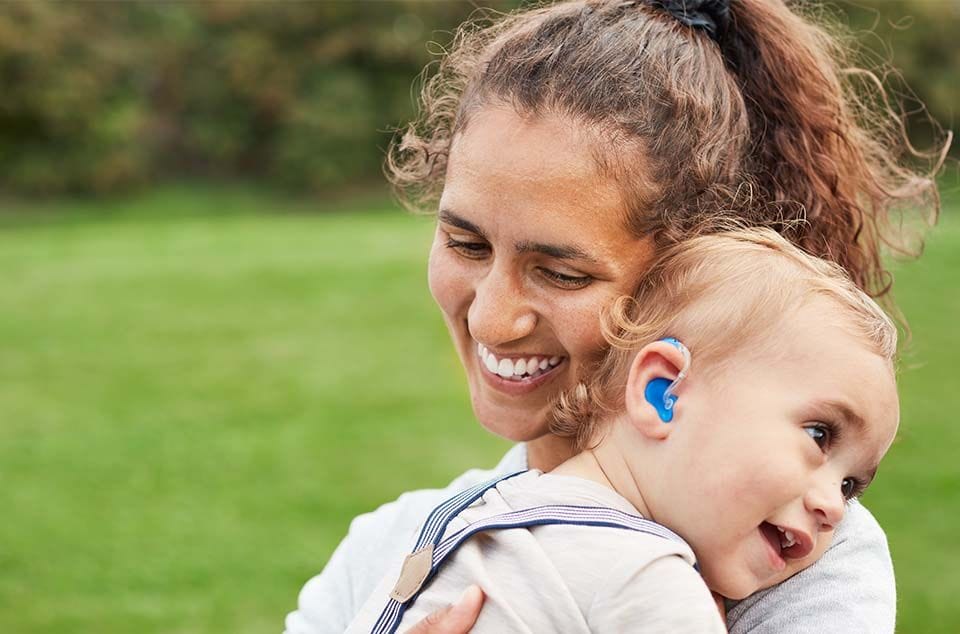
Children’s hearing aids are almost exclusively Behind-the-Ear (BTE) models. BTEs are durable, easy for parents to handle, and the earmolds can be replaced cheaply as the child grows.
Essential Child-Safe Features:
- Tamper-Resistant Battery Doors: Prevents toddlers from swallowing toxic batteries.
- Durability: IP68 waterproof ratings and nano-coated shells to survive playgrounds and spills.
- FM/DAI Compatibility: Essential for connecting to teacher microphones in classrooms.
- LED Indicators: Visual lights that tell parents the device is on and the battery is working.
WARNING: Avoid Over-the-Counter (OTC) Hearing Aids
OTC hearing aids are strictly for adults. Children’s ears are growing, and their hearing profiles are complex. OTC devices lack safety limits and could permanently damage a child’s residual hearing.
Best Hearing Aid Brands for Kids
- Phonak: The industry leader in pediatrics. Their Sky Marvel series offers excellent durability, classroom connectivity, and kid-friendly colors.
- Oticon: Their Opn Play models feature advanced technology designed to help children process speech in noisy environments, promoting language development.
(Note: For profound deafness or specific malformations, surgical alternatives like Cochlear Implants or Bone-Anchored Hearing Aids (BAHA) may be recommended).
How to Get a Prescription
A pediatric audiologist leads the process:
- Testing: They use child-friendly tests. For infants, objective tests like Auditory Brainstem Response (ABR) and Otoacoustic Emissions (OAE) measure brain waves without needing the child to respond.
- Evaluation: Assessing speech development and classroom needs.
- Fitting: Custom earmolds are made, and the devices are precisely programmed.
- Follow-Up: Children need frequent adjustments as their ear canals grow.
Financing & Insurance
Pediatric hearing aids are a medical necessity, and financial help is available:
- Early Hearing Detection and Intervention (EHDI): State-mandated programs that identify newborn hearing loss and often cover intervention costs.
- Medicaid & Insurance: Many private plans and Medicaid cover pediatric hearing aids.
- School Districts: Under special education laws (IDEA), schools may provide assistance or FM systems.
- Non-Profits: Organizations like the Miracle-Ear Foundation offer grants to families in need.
Daily Care and Maintenance
- Routine: Make putting them on part of the morning routine.
- Safety: Use retention clips or headbands for toddlers to prevent loss.
- Cleaning: Wipe daily with a dry cloth. Use a drying kit overnight to remove sweat.
- Battery Checks: Check the batteries every morning before school.