

Best Hearing Aids for Seniors 2026: Expert Picks, Prices & Financial Help


Published
Last medically reviewed:
Have you ever watched someone you love slowly pull away from the dinner table conversation — nodding and smiling, but clearly lost? Hearing loss has a quiet way of stealing connection, confidence, and joy from the people we care about most. For millions of seniors and their families, finding the right hearing aid isn’t just a medical decision — it’s a step toward getting life back. The good news is that today’s options are better, more affordable, and more personalized than ever before. Let’s walk through what you need to know so you can make the right choice with confidence.
For seniors, hearing aids are not just devices; they are gateways to enhanced communication, safety awareness, and an overall improved quality of life. Choosing the right hearing aid involves considering factors like the degree and type of hearing loss, technological features, comfort, and cost. We delve into a variety of hearing aid brands, including MDHearing VOLT Max, Jabra Enhance Select 300, Phonak Audeo-Lumity, Lexie Hearing Aid Features, and Starkey Genesis Ai, offering insights into their unique features. Financial assistance options, such as Medicare, Medicaid, Veterans Affairs, AARP, Vocational Rehabilitation, and private insurance, are explored. We have outlined the process of obtaining prescription hearing aids, emphasizing the importance of professional guidance and follow-up care. We discuss the causes of hearing loss among seniors, its types, and the associated consequences. The article explores the indications and advantages of wearing hearing aids for seniors, emphasizing potential benefits in socialization, dementia risk reduction, and tinnitus relief.
Best hearing aid for most seniors in 2026: The Jabra Enhance Select 300
($1,995/pair) offers professional audiologist programming by remote, 3-year warranty,
and near-invisible design — without requiring a clinic visit. On a tight budget?
The MDHearing VOLT Max ($699.98/pair) is the best OTC starting point, with a
45-day risk-free trial and lifetime support from licensed professionals.
Why hearing aids for seniors
It’s easy to dismiss a little hearing difficulty as “just part of getting older” — but the impact goes far deeper than missing a few words. Here’s why addressing hearing loss matters so much:
Hearing loss is a prevalent concern among seniors and can significantly impact their overall well-being. Here are key reasons why seniors may need hearing aids:
- Enhance communication and safety awareness
- Improve quality of life
- Make better social engagement
- Preserving cognitive function
This demographic experiences age-related changes in their auditory system, leading to various hearing-related concerns. According to the World Health Organization (WHO), around 466 million people worldwide have disabling hearing loss, and this number is expected to increase to 900 million by 2050. Furthermore, a study published in the American Journal of Public Health found that hearing loss is associated with an increased risk of social isolation and cognitive decline in older adults (Gopinath et al., 2013;doi: 10.1136/jech-2012-201783).
What are the criteria for choosing a hearing aid
Now that we understand why hearing aids matter, let’s look at what actually separates a good fit from a frustrating one. Not all hearing aids are created equal, and the right choice depends on several personal factors.
The list below indicates the most relevant elements to consider:
- Degree and type of hearing loss
- Technology and features:
- Automatic gain control
- Directional processing: Enhances the sounds in front of the user while reducing distracting background noise from beside and behind.
- Feedback manager: Allows for greater amplification without whistling.
- Noise reduction: Improves listening comfort and speech intelligibility by reducing distracting environmental noise such as fans or motors.
- Telecoil: Connects to telephones, hearing loops, neck loops and wireless systems.
- Comfort and fit — including dexterity problems, waterproofing, and speech clarity
- Cost and affordability
- Follow-up and support services
- Counseling and rehabilitation services
- Custom-programming: The sound processor inside the hearing aid is programmed to the user’s hearing test results.
Overview of some hearing aid brands for seniors
With the key criteria in mind, let’s take a practical look at what’s actually available on the market today — from affordable over-the-counter options to premium prescription devices.
In this chapter we discuss various hearing aid brands from the OTC to prescription hearing aid devices. We selected some high-end devices from each brand for description. This is done to give a little overview of the various offers from the market.
| Brand model | MDHearing VOLT Max | Jabra Enhance Select 300 | Lexie Hearing Aid | Phonak | Starkey |
|---|---|---|---|---|---|
| Best For | Budget-conscious buyers, first hearing aid | Professional quality without clinic visits | Self-fitters who prefer Bose audio quality | Complex or severe hearing loss, noise-heavy environments | Fall detection, health tracking, premium AI features |
| Price (per pair) | $497–$797 | $1,495–$1,695 | $299–$999 | $2,000–$7,500+ | $1,500–$4,000+ |
| Battery | Rechargeable | Rechargeable | Rechargeable | Rechargeable | Rechargeable |
| Shipping | Free shipping | Free shipping & returns | Included with purchase | Varies | Contact Starkey for shipping information |
| Connectivity | Bluetooth-enabled | Bluetooth streaming capabilities | Streams calls directly to hearing aids | Universal connectivity | Streams calls, music, and more |
| Support | Free lifetime support | 3 years of professional hearing care | Lexie Experts available for support | Integrated health data tracking | Customer testimonials and support |
| Warranty | 1-year warranty | 3 years (Premium), 1 year (Basic) | 1-year warranty | Various options | Various options |
| Trial Period | 45-day risk-free trial | Not specified | Not specified | Not specified | Not specified |
| Money-Back Guarantee | 100% money-back guarantee | Not specified | Not specified | Not specified | Not specified |
💬 Au.D Top Picks: Gathers C. David, Au.D
For most seniors (mild to moderate hearing loss, budget flexible):
The Jabra Enhance Select 300 ($1,995/pair, Premium) is our top recommendation. It combines professional audiologist programming via remote adjustment, 3-year support warranty, and hearing aids small enough (1.15″ × 0.33″, 2.23g) to be nearly invisible — with Bluetooth streaming built in.For seniors on a tight budget:
The MDHearing VOLT Max ($699.98/pair) is the best OTC entry point. It offers state-of-the-art noise management, a 45-day risk-free trial, and lifetime support from licensed hearing professionals — at a fraction of prescription pricing.For seniors with complex hearing needs or noisy environments:
The Phonak Audéo Lumity (from $2,600/pair) is the clinical standard. Its SmartSpeech™ technology automatically adapts to restaurants, moving cars, and outdoor settings — the situations seniors report as most challenging.
MDHearing VOLT Max
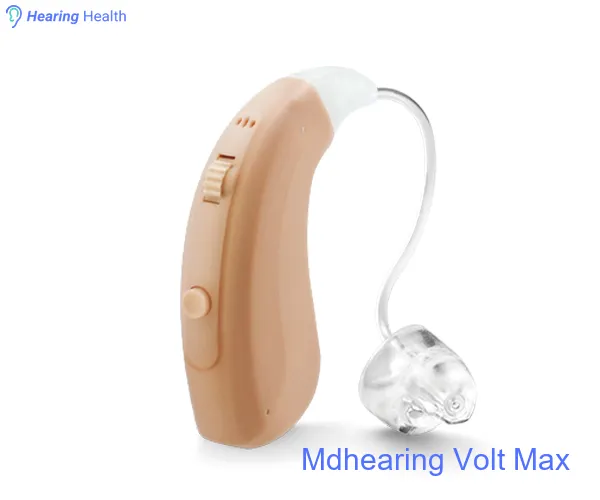
A great entry point for seniors who want professional-grade results without the prescription price tag. Here’s what it offers:
| Feature | Description |
|---|---|
| Type | Rechargeable hearing aid |
| Customization | Customized for specific hearing needs using a smartphone or tablet |
| Noise Management | State-of-the-art noise management that automatically adapts to the environment |
| Included Accessories | Portable charging case, cleaning tool |
| Trial Period | 45-day risk-free trial |
| Money-Back Guarantee | 100% money-back guarantee |
| Warranty | Extended 2-year warranty (VIP BONUS) |
| Customer Care | Priority customer care phone line (VIP BONUS) |
| Professional Support | One-on-one fitting and onboarding from a licensed hearing professional (VIP BONUS) |
| Lifetime Support | Unlimited follow-up care with licensed hearing professionals |
| Battery Life | Long-lasting rechargeable battery providing a full day of crystal-clear conversations with a single charge |
| Charging Case | Portable charging case included for free, providing up to 3 full charges on the go |
| Custom-Fit Feature | Custom-fit to unique hearing from the comfort of home |
| Personalization App | Companion mobile app checks hearing and personalizes settings |
| Program Settings | Four unique program settings designed by audiologists to accommodate different noise levels in various environments |
| Microphone Technology | Advanced microphone technology separates desired sounds from background noise in noisy environments |
| TV Watching Feature | Advanced technology focuses on dialogue, allowing users to turn down TV volume to a comfortable level |
| Crystal-Clear Conversations | State-of-the-art hearing technology for stress-free conversations |
| Phone Call Clarity | Frustration-free phone calls with clear communication |
| Personalization without Audiologist | Customization to specific hearing without leaving home and without an audiologist |
| Tech Simplicity | No need to be tech-savvy |
| Comfort and Discretion | Clear hearing with no whistling, comfortable to wear, and discreet (others can’t see) |
Please note that some features are presented as “VIP BONUS” and may be subject to specific conditions.
Add protection plan subscription for VOLT — $9.99/month. Includes coverage for ALL types of accidental damage, and coverage for ANY defect or malfunction of the hearing aid.
Jabra Enhance Select 300
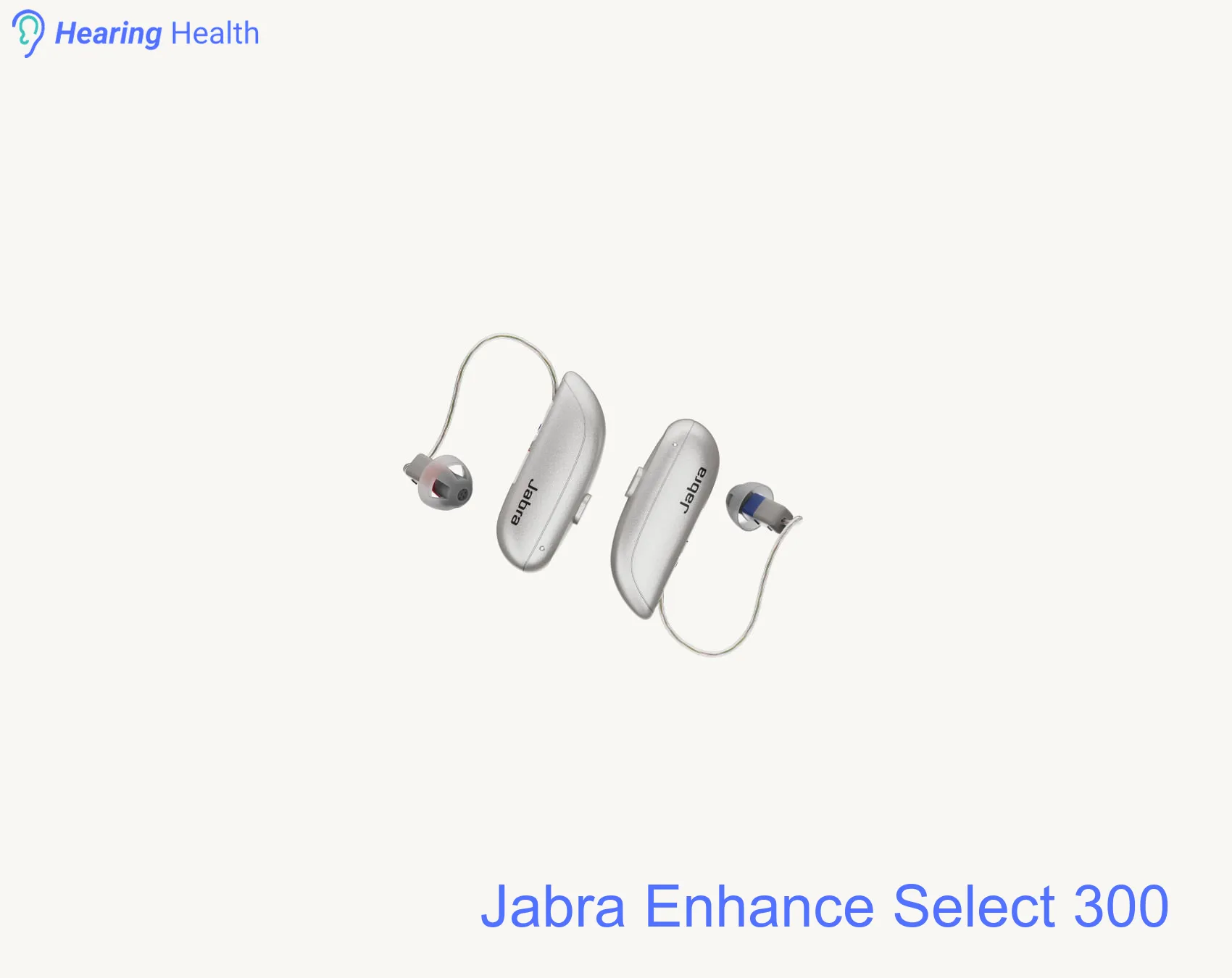
For those ready to step up to a more clinical-grade experience, the Jabra Enhance Select 300 brings professional programming straight to your door.
Learn more about its premium and basic packages, Bluetooth streaming capabilities, and a charging case that ensures all-day listening.
Premium Package: $1,995
- Custom-programmed to your unique hearing needs
- 3 years of professional hearing care, warranty, and loss & damage protection
- Individually programmed based on your hearing test or audiogram
- Step-by-step guidance for comfortable fitting
- 3 years of remote adjustments for personalized experience
- 3-year warranty, including loss & damage protection
Basic Package: $1,795
- Pre-programmed for common types of hearing loss
- Choose from 3 preset hearing profiles
- 1-year warranty and loss & damage protection
- Discreet “mini” design for all-day comfort
- Smart microphones and powerful processor for natural hearing in noise
- Enhanced spatial sense for true depth of sound
- Advanced acoustics for built-in noise cancellation
Features:
- Nearly-invisible hidden design: 1.15″ x 0.33″, 2.23 grams
- Bluetooth Streaming: Stream calls and music to your hearing aids with hands-free calling (compatible with iPhone 11 or newer and iOS 15.3.1 or later, or Phone Clip+ accessory for other devices)
- Charging Case: Provides all-day listening on a single charge; music mode improves sound quality for live music
- Mobile App: Control your hearing aid settings, stream music, and take calls through the easy-to-use app
- True Depth of Sound: Enhanced spatial sense for a deeper, more immersive hearing experience
- Advanced Acoustics: Built-in noise cancellation technology for improved listening comfort
- 100-day risk-free trial, free shipping & returns
Phonak Audeo Lumity
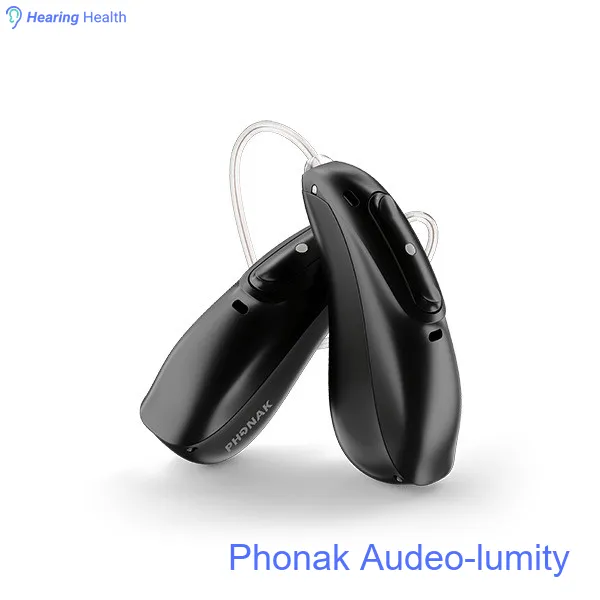
If your loved one has more complex hearing needs or struggles in challenging environments like busy restaurants or moving cars, the Phonak Audeo Lumity is worth a close look.
| Feature | Description |
|---|---|
| Design | Receiver-in-the-canal design with a focus on improved speech understanding |
| Rechargeability | Fully rechargeable |
| Water Resistance | Waterproof |
| Connectivity | Universal connectivity to various devices |
| Health Data Tracking | Integrated health data tracking feature through the myPhonak app |
| Speech Focus Technology (StereoZoom 2.0) | Adaptable strength of focus in noisy environments, adjustable in real time for improved signal-to-noise ratio |
| SpeechSensor | Algorithm for detecting the direction of the main speech signal, enhancing speech understanding in various situations |
| Reduced Listening Effort | Implementation of technology to reduce listening effort, potentially leading to reduced feelings of fatigue |
| Remote Control via myPhonak App | Empowers users to personalize their hearing experience, offering remote control functionality through a dedicated mobile app |
| Compatibility with Roger Wireless Devices | Integration with Roger wireless microphones for enhanced speech clarity and distance overcoming |
| Tap Control | Control features through tap gestures, adding convenience and ease of use |
| Dynamic Noise Cancellation | Utilizes dynamic noise cancellation technology to reduce unwanted noise |
| Motion Sensor Hearing | Incorporates motion sensor technology for optimized hearing based on movement |
| Tinnitus Balance | Addresses tinnitus concerns with a balance feature |
| WhistleBlock | Effectively blocks whistling sounds for a comfortable listening experience |
Lexie hearing aid features
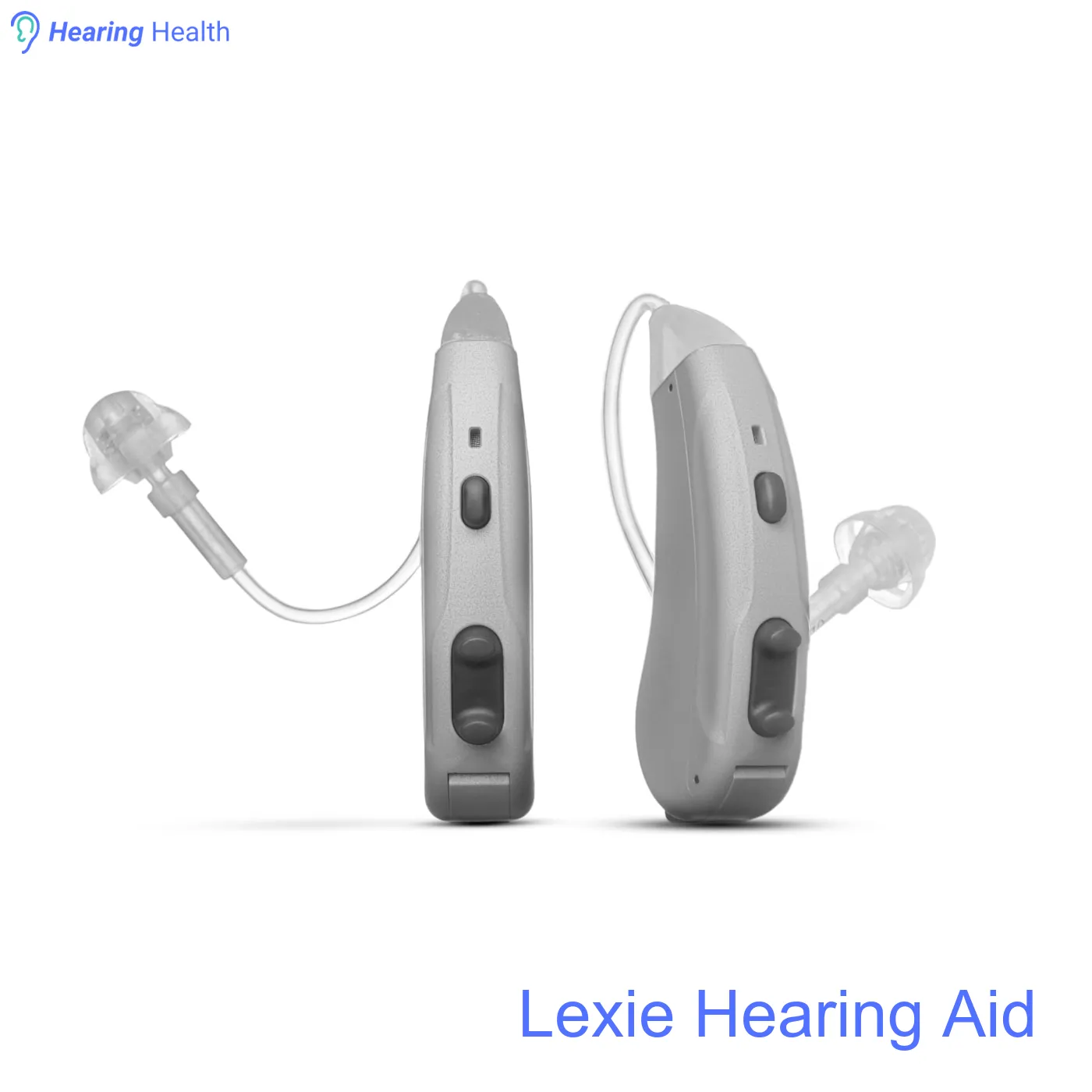
Powered by Bose audio technology, Lexie brings a fresh approach to self-fitting hearing aids that puts control firmly in the user’s hands.
| Feature | Lexie B2 — $999 | Lexie B1 — $849 | Lexie Lumen — $799 |
|---|---|---|---|
| Sound Quality | Clear, quality sound, Powered by Bose | Clear, quality sound with Bose hardware | In-app hearing test |
| Customization | Clinically-proven audiologist-quality customization via the app | — | Easy setup |
| Connectivity | Bluetooth-enabled to stream iPhone calls | — | Replaceable batteries |
| Battery Life | Rechargeable, up to 18 hours of battery life | Replaceable batteries | — |
| Self-Fitting | Self-fitting technology | — | — |
| Mobile App | Lexie mobile app for sound customization in various settings | — | — |
| Design | Discreet receiver-in-canal design for clear and natural sound | — | — |
| Advanced Features | Feedback cancellation, noise reduction for background noise, option to store preferred settings | — | — |
| Support | Award-winning personalized support, 7 days a week | — | — |
| Warranty | 1-year warranty | — | — |
| Additional Info | Does not stream music (details in FAQs) | — | — |
Common features across all models — included with purchase: 1 x Charging case, 1 x Pair Lexie B2 hearing aids Powered by Bose, 1 x Wire sizing tool, 1 x USB-C to USB-A cable, 3 x Pairs open domes (Size 1, 2, 3), 3 x Pairs closed domes (Size 1, 2, 3), 1 x Cleaning brush with magnet, 1 x Wax Guard Pack, 1 x User Manual and Quick Start Guide.
Note: The Lexie B2s do not stream music or media, and streaming is not applicable for Android.
Starkey Genesis AI
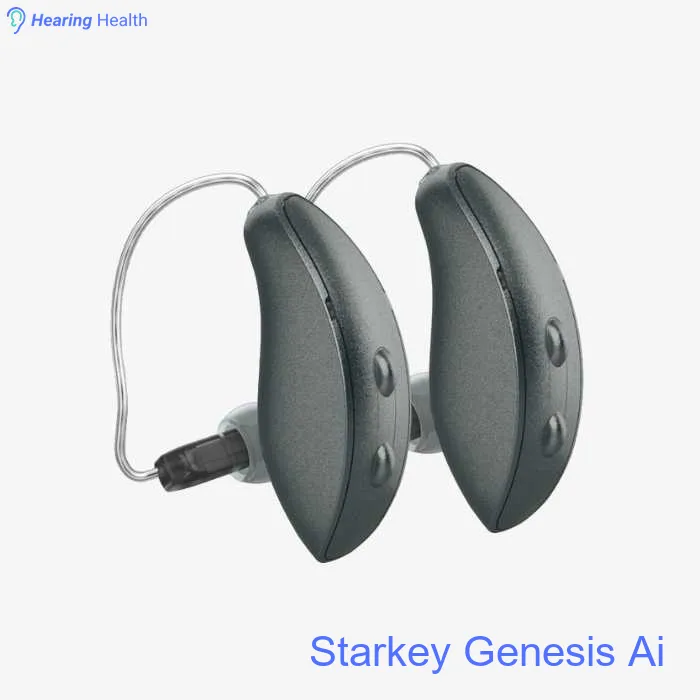
At the premium end, the Starkey Genesis AI represents some of the most advanced hearing technology available to seniors today — including features that go well beyond just hearing.
| Feature | Description |
|---|---|
| Design | Discreet, ergonomic design |
| Rechargeability | All-day rechargeability |
| Durability | Durable and waterproof. Built tough to withstand sweat, dirt, dust, drops, and dunks. (Up to 1-meter depth. Rechargeable styles only.) |
| Sound Processing | Genesis AI hearing aids mimic the cerebral cortex, processing sounds like a “normal” auditory system. Automatically makes over 80 million adjustments per hour for clearer, more distinct, and true-to-life sound quality. |
| Noise Reduction | Hear soft sounds without distracting noise. Reduces the effort it takes to listen and hear. |
| Speech Enhancement | Distinguishes words and speech more intuitively and naturally. |
| My Starkey App | Easy-to-use app optimized for sound quality on-demand, step counting, engagement tracking, fall detection, adjusting settings, finding lost aids, streaming calls, music, and more. |
| Connectivity | Streams calls, music, and more directly to both hearing aids for a more true-to-life listening experience. |
| Well-Being Features | Uses AI to optimize sound quality, tracks steps, and helps achieve well-being goals. Detects falls and alerts family or friends. |
How to get help with hearing aid cost
The price of hearing aids can feel overwhelming at first — but there’s more help available than most families realize. Here are the main financial assistance options worth exploring:
The financial aid provided by various organizations for seniors is very variable. We listed some below along with their offers.
- Medicare: Medicare typically does not cover routine hearing exams or hearing aids. However, it may cover hearing services in certain circumstances, such as diagnostic hearing and balance exams when ordered by a doctor. As stated in Centers for Medicare & Medicaid Services. (2021). “Medicare Coverage of Hearing Services.”
- Medicaid: Medicaid coverage for hearing aids varies by state. Some states provide comprehensive coverage, while others have limitations or may require seniors to use specific providers. Medicaid eligibility criteria and coverage vary, and some seniors may find limitations in the choice of available hearing aids.
- U.S. Department of Veterans Affairs (VA): The VA provides hearing healthcare services, including hearing aids, for eligible veterans. Veterans with service-connected hearing loss may receive hearing aids at no cost. As noted in U.S. Department of Veterans Affairs. (2021). “Hearing Aids.”
- AARP: AARP itself does not provide financial aid for hearing aids. However, AARP members may access discounts and benefits through affiliated hearing aid providers.
- Office of Vocational Rehabilitation: Vocational Rehabilitation programs may provide financial assistance for hearing aids to individuals with disabilities, including seniors, who are seeking employment or maintaining employment.
- Private Insurance: Some private insurance plans may cover part of the cost of hearing aids. Coverage varies widely, and seniors need to check their specific insurance policy for details.
It’s important for seniors to carefully review the details of the financial assistance programs offered by these organizations to understand eligibility, coverage, and any limitations that may apply to their specific situation.
Rechargeable Hearing Aids: Why They Matter for Seniors
Most of the hearing aids reviewed on this page are rechargeable — and for seniors, this is not just a convenience feature. Tiny zinc-air batteries (sizes 10 and 312) require dexterity to handle and must be replaced every 3–14 days. For seniors with arthritis, reduced grip strength, or low vision, rechargeable models eliminate this challenge entirely. All of the recommended models in this guide — MDHearing VOLT Max, Jabra Enhance Select 300, Phonak Audéo Lumity, and Starkey Genesis AI — are rechargeable as standard or as the primary recommended option. The Lexie B2 is also rechargeable with up to 18 hours of battery life.
How to get the prescription hearing aid
Once you’ve explored the financial side, the next step is understanding what the process actually looks like when working with a hearing professional.
Unlike OTC hearing aids, obtaining prescription hearing aids involves several steps and typically begins with a comprehensive hearing evaluation by a licensed audiologist or hearing healthcare professional. Here’s an overview of the process:
- Hearing Evaluation: This is an essential step to diagnose the cause of the hearing loss. The audiologist will assess the individual’s hearing ability, determine the type and degree of hearing loss, and identify specific needs.
- Discussion of Hearing Needs and Lifestyle: This helps tailor the selection of hearing aids to the individual’s preferences and daily activities.
- Prescription and Fitting: The audiologist will prescribe the most suitable hearing aids and program them to meet the individual’s hearing needs. Customization is crucial for optimal performance and user satisfaction.
- Trial Period and Follow-up: Individuals often go through a trial period with the prescribed hearing aids. Follow-up appointments with the audiologist are crucial for adjustments and fine-tuning.
- Regular Check-ups: Regular follow-ups contribute to the ongoing success of hearing aid use.
It’s essential for individuals to seek professional guidance and follow through with the recommended steps to ensure that prescription hearing aids are fitted and programmed optimally for their specific hearing needs.
The causes of hearing loss among seniors and consequences
Understanding why hearing loss happens is just as important as choosing a device to address it — it can make all the difference in finding the right solution.
Types of hearing loss in seniors:
Hearing loss in seniors can be categorized into different types based on the affected part of the auditory system. The main types are:
- Sensorineural Hearing Loss (SNHL): Caused by damage to the inner ear (cochlea) or the auditory nerve, due to aging, exposure to loud noise, genetics, and certain medications.
- Conductive Hearing Loss: Caused by issues in the outer or middle ear that prevent sound from reaching the inner ear, due to earwax blockage, ear infections, fluid in the middle ear, and structural problems.
- Mixed Hearing Loss: A combination of sensorineural and conductive hearing loss.
- Auditory Neuropathy Spectrum Disorder (ANSD): Affects the transmission of signals from the inner ear to the brain, despite normal outer hair cell function. As cited in “Rance, G. (2008). Auditory neuropathy/dys-synchrony and its perceptual consequences. Trends in Amplification, 12(1), 1–16.”
Causes of hearing loss in the elderly by frequency:
- Age-Related Hearing Loss (Presbycusis): Gradual hearing loss associated with aging. Common in seniors, especially over the age of 65.
- Noise-Induced Hearing Loss (NIHL): Caused by prolonged exposure to loud noises. Common, as many seniors have had a lifetime of noise exposure.
- Medical Conditions: Hearing loss can be associated with certain medical conditions, such as cardiovascular diseases and diabetes.
- Genetic Factors: Some individuals may have a genetic predisposition to hearing loss.
Understanding the type and causes of hearing loss is crucial for developing appropriate intervention strategies, including the use of hearing aids, for seniors.
The indications of hearing aids
Finally, it’s worth stepping back and looking at the bigger picture — because the benefits of hearing aids stretch well beyond simply hearing better.
Advantages of wearing hearing aids for seniors:
- Socialization: Improved hearing through the use of hearing aids facilitates better communication, leading to increased social engagement and participation.
- Dementia: Addressing hearing loss with hearing aids has been associated with a potential reduction in the risk of cognitive decline and dementia. As stated in “Lin, F. R., Yaffe, K., Xia, J., Xue, Q., Harris, T. B., Purchase-Helzner, E., … Health ABC Study Group. (2013). Hearing Loss and Cognitive Decline in Older Adults. JAMA Internal Medicine, 173(4), 293–299.doi: 10.1001/jamainternmed.2013.1868”
- Tinnitus: Hearing aids can provide relief from tinnitus by improving overall auditory input, reducing the perceived loudness of tinnitus. As noted in “Sereda, M., Xia, J., El Refaie, A., Hall, D. A., & Hoare, D. J. (2018). Sound therapy (using amplification devices and/or sound generators) for tinnitus. Cochrane Database of Systematic Reviews, 12, CD013094. doi: 10.1002/14651858.CD013094.”
It’s important to note that while these advantages are supported by research, individual responses to hearing aids may vary. Regular hearing check-ups and appropriate follow-up care with a healthcare professional are essential for maximizing the benefits of hearing aids for seniors.
What if my elderly parent refuses to get a hearing aid?
In this case, you have to take things with a light hand. Trying to show him or her the effect of hearing loss on daily relations and how it’s evolving. Use assistive listening technology to help in the first stages. But in the end, a check with a professional is mandatory.
The path to better hearing starts with a single honest conversation — and you’ve already taken the first step by doing your research. Whether you’re exploring an affordable OTC option or preparing for a full audiologist consultation, the most important thing is not to wait. Every day with untreated hearing loss is a day of missed connection — and that’s too high a price to pay.
Your next steps:
- Under $1,000: Order the MDHearing VOLT Max with the 45-day trial — risk-free
- $1,000–$2,500: Request a free online consultation through Jabra or a local
audiologist for the Enhance Select 300- $2,500+: Schedule an audiologist consultation to discuss Phonak Audéo Lumity
or Starkey Genesis AI based on your audiogram- Veterans: Contact your VA healthcare system — hearing aids may be available
at no cost for service-connected hearing loss
Senior-friendly features matter — but so does fit and budget. Browse our all hearing aids reviewed for every need for the complete picture.
Get a glance on our general guide for device selection here →

Frequently Asked Questions