CROS, BiCROS, and AmpCROS Hearing Aids


Published
Last medically reviewed:
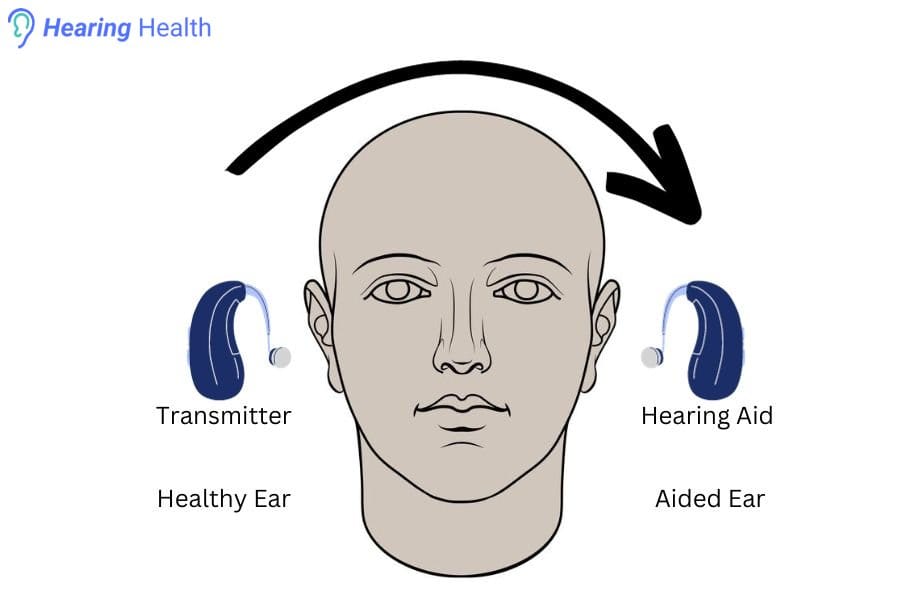
CROS, BiCROS, and AmpCROS hearing aids are specialized devices for individuals with hearing loss in one ear (unilateral hearing loss or single-sided deafness). They work by picking up sound from the impaired ear and transmitting it to the better-hearing ear. The right choice depends on whether your “good” ear has normal hearing, some hearing loss, or needs specific amplification.
What Are These Devices?
When you have significant hearing loss in one ear, traditional hearing aids may not help. That’s where Contralateral Routing of Signal (CROS) systems come in.
- CROS: Best if you have one ear with profound hearing loss and one ear with normal hearing. It transmits sound from the bad ear to the good ear without amplifying it.
- BiCROS: Best if you have profound hearing loss in one ear and some hearing loss in the other. It transmits sound from the bad ear and amplifies it for the better-hearing ear.
- AmpCROS: Best if you want the sounds on the impaired side to be amplified before being transmitted to your normal-hearing ear.
How Do They Work?
These systems use two earpieces that communicate wirelessly:
- Microphone (on the impaired ear): Captures the sound you cannot hear.
- Transmitter: Wirelessly sends the sound to the other ear.
- Amplifier: Depending on the model (BiCROS/AmpCROS), the sound is boosted.
- Receiver (on the better ear): Plays the sound so your brain can process it.
CROS vs. BiCROS vs. AmpCROS: Which is Right For You?
Choosing the right device comes down to the health of your “good” ear:
- Choose CROS if: Your good ear hears perfectly.
- Choose BiCROS if: Your good ear also needs some help hearing.
- Choose AmpCROS if: You have normal hearing in one ear but want the signals from the bad ear to be artificially boosted before transmission.
Pros and Cons
Pros:
- Instantly improves sound awareness on your “blind side.”
- Non-surgical (unlike BAHA or Cochlear Implants).
- Modern models are discreet and offer Bluetooth.
Cons:
- Does not restore hearing in the deaf ear (it just routes the sound).
- Battery drain is higher due to constant wireless transmission between the two ears.
- AmpCROS and BiCROS can take time for your brain to adjust to the amplified signals.
Alternative Treatments
If CROS systems aren’t right for you, other medical options exist:
- BAHA (Bone Anchored Hearing Aid): Uses a surgical implant to send sound vibrations through your skull bone directly to your inner ear.
- Cochlear Implant: A surgical device that directly stimulates the auditory nerve. Used for severe-to-profound sensorineural hearing loss.
Steps to Get a Prescription
- Schedule an Assessment: See a licensed audiologist for a comprehensive test, including speech-in-noise evaluation.
- Discuss Your Lifestyle: Talk about your daily environments to determine the right technology.
- Custom Fitting: The audiologist takes ear impressions and programs the devices.
- Trial Period: Most clinics offer a trial period so you can test them in real life.
- Follow-Up: Regular adjustments are crucial for the first few months.
(Note: Setting up AmpCROS is highly specialized, requiring two traditional hearing aids programmed to work together over a dedicated Telephone program).
Costs & Financing
A complete CROS/BiCROS system generally ranges from $3,000 to $5,000 USD.
- Insurance: Some health plans cover a portion. Common CPT billing codes used are 92590 and 92601.
- Financing: Many clinics accept Health Savings Accounts (HSAs), Flexible Spending Accounts (FSAs), or third-party payment plans.
Top Brands: Signia (Motion Charge&Go X), Phonak (Bolero Marvel), Oticon (Opn S), and Starkey (Muse iQ).