
Hearing Aid Battery Diversity
By
Written On
Hearing aid batteries are essential for driving the performance of hearing devices and come in various types, categorized by size and output power. Disposable hearing aid batteries are single-use and must be replaced once depleted.Hearing aid batteries typically have different amperage ratings, corresponding to their physical size and power output. The chemistry evolution in hearing aid batteries has evolved from zinc-air to silver-zinc and lithium-ion, providing longer-lasting power in a compact size.
Rechargeable batteries offer a longer lifespan, faster charging times, and enhanced performance. Some notable brands in the hearing aid battery market include Energizer, Duracell, Rayovac, and Power One. Choosing the right brand depends on personal preference, hearing aid model compatibility, and individual battery needs.
4 Type of Disposable Hearing Aid Batteries
Disposable hearing aid batteries represent a common and convenient power solution for individuals with hearing loss. These batteries are single-use and must be replaced once depleted.
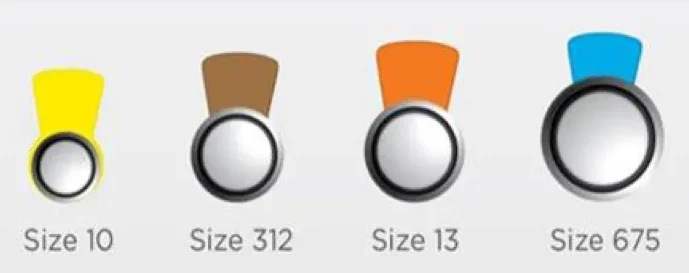
Hearing aid batteries vary in size, color, and output power, catering to the specific needs of diverse hearing aid models. The following table outlines the distinctions among different battery types:
| Battery Type | Size | Color | Output Power | Height | Width | Voltage Range | Zinc Air mAh |
|---|---|---|---|---|---|---|---|
| Size 10 | Small | Yellow | Low | 5.8 MM | 3.6 MM | 1.4V-1.45V | 90 mAh |
| Size 312 | Intermediate | Brown | Moderate | 7.9 MM | 5.4 MM | 1.4V-1.45V | 160 mAh |
| Size 13 | Large | Orange | High | 7.9 MM | 3.6 MM | 1.4V-1.45V | 280 mAh |
| Size 675 | Extra Large | Blue | Very High | 11.6 MM | 5.4 MM | 1.4V-1.45V | 600 mAh |
Understanding these differentiators is crucial for seeking optimal performance from their hearing aids. Additionally, you should be aware that the color-coded system simplifies the identification of battery types. For instance, yellow represents size 10, brown for size 312, orange for size 13, and blue for size 675. This color-coding aids you in easily identifying and selecting the appropriate battery for their hearing aids.
What is The Output Power in Hearing Aid Batteries
To comprehend output power, it’s essential to understand the associated concepts of voltage and amperage.
Voltage is the measure of the electrical potential difference, and in hearing aid batteries, it represents the force that pushes the electrical current through the device. Commonly, hearing aid batteries operate at low voltages, such as 1.4 to 1.45 volts.
Amperage, measured in milliampere-hours (mAh), indicates the amount of electric charge a battery can deliver over time.
Understanding the amperage also aids healthcare professionals and audiologists in guiding patients on optimal battery selection based on their specific hearing aid model and usage patterns. Additionally, manufacturers provide recommendations regarding the compatible battery types and amperage for each hearing aid, ensuring optimal performance.
Matching hearing aid batteries to devices
Selecting the right battery for a specific hearing aid device is crucial for optimal performance.
Various hearing aid models have distinct power requirements, and choosing the correct battery type ensures seamless operation.
Size 10 Batteries: Suited for smaller, in-the-ear (ITE) hearing aids, offering a compact and discreet power source.
Size 312 Batteries: Versatile and fitting for both in-the-ear (ITE) and behind-the-ear (BTE) devices, striking a balance between size and power.
Size 13 batteries are commonly used in larger behind-the-ear (BTE) hearing aids, providing extended power for devices with higher amplification needs.
Size 675 Batteries: Engineered for advanced behind-the-ear (BTE) models, ideal for devices requiring increased amplification capabilities.
Battery for the Cochlear Implant and BAHA
Cochlear implants and bone-anchored hearing aids utilize a significant amount more power than normal hearing aids. They use a size 675 battery or a more powerful one, identifiable with a +P labeled as a size 675P battery.
| Battery Type | Size | Color | Output Power | Battery Lifespan | Average service (hours) | Device Match |
|---|---|---|---|---|---|---|
| Size 10 | Small | Yellow | Low | 3–7 Days | 245 | ITE |
| Size 312 | Intermediate | Brown | Moderate | 7–14 Days | 199 | ITE, BTE |
| Size 13 | Large | Orange | High | 5–10 Days | 266 | BTE |
| Size 675 | Extra Large | Blue | Very High | 10–20 Days | 270 | BTE, CI,BAHA |
How to preserve hearing aid battery life
Ensuring proper care for hearing aid batteries is integral to maximizing their lifespan and maintaining reliable functionality. Here are essential tips:
- Dispose of Expired Batteries Properly: Follow recommended disposal guidelines for hearing aid batteries, which often involve recycling or using designated battery disposal facilities.
- Storage Conditions: Store batteries in a cool, dry place to prevent exposure to excessive heat or humidity.
- Remove Tab When Ready for Use: For zinc-air batteries, remove the protective tab and allow them to “breathe” for a few minutes before inserting them into the hearing aid. This ensures optimal air circulation, contributing to enhanced performance. This gesture is known as a five-minute rule.
- Keep Batteries in Original Packaging: Storing batteries in their original packaging, especially if they won’t be used for an extended period, protects them from environmental factors and maintains their integrity.
- Regular Checks: Periodically inspect batteries for any signs of corrosion or damage.
How to Assess Hearing Aid Battery Health
Follow these practical steps,to effectively test the health of your hearing aid battery:
- Invest in a reliable battery tester designed for hearing aid batteries. Place the battery in the tester according to the device’s instructions.
- Some hearing aids have a built-in low-battery warning, producing a specific sound when the battery is running low.
- Regularly test your hearing aid batteries, especially if you notice any changes in performance. This proactive approach helps prevent unexpected disruptions in device functionality.
Why Choosing Disposable Hearing Aid Batteries
When considering disposable hearing aid batteries, it’s essential to weigh the pros and cons to make informed decisions.
Pros:
- Accessibility and Availability: Disposable batteries are widely available, making them easily accessible for you. They are often found in local stores or pharmacies.
- Cost-Effectiveness: In general, disposable batteries tend to be more cost-effective upfront compared to rechargeable alternatives, providing an economical option for you.
- Convenience: Changing disposable batteries is a straightforward process, requiring no charging time. You can quickly replace depleted batteries, minimizing downtime.
- Variety of Sizes: Disposable batteries come in various sizes, catering to the diverse needs of different hearing aid models, as recommended by the American Academy of Audiology.
Cons:
- Environmental Impact: The disposal of used disposable batteries contributes to environmental waste. As these batteries are not rechargeable, their accumulation can pose ecological challenges.
- Lifetime Cost: While the upfront cost may be lower, the cumulative expense of regularly purchasing disposable batteries may surpass the cost of a rechargeable battery over time.
- Inconvenience of Replacements: Regularly replacing disposable batteries can be inconvenient for you, particularly for those with dexterity or vision issues.
What are Health Hazards of Hearing Aid Batteries
Hearing-aid batteries, particularly zinc-air batteries, contain chemicals that can be harmful if ingested. While accidental ingestion is rare, it poses a risk, especially for children, pets,pets or individuals with cognitive impairments. In such a situation,you have to go to the emergency room because it can damage internal organs.As cited in Silvio, Pires, and Ferreira Bento. “Performance analysis of ten brands of batteries for hearing aids Ricardo. International Archives of Otorhinolaryngology 17 No. 03, 2013, www.thieme-connect.com/products/ejournals/html/10.7162/S1809-977720130003000010.
Preventive Measures:
- Storage Awareness: Store spare batteries in a secure location, out of reach of children and pets, to minimize the risk of accidental ingestion.
- Prompt Replacement: Replace batteries promptly if signs of leakage or damage are observed. This mitigates the risk of exposure to harmful substances.
Best Brands in Hearing Aid Batteries
In the realm of hearing aid batteries, certain brands stand out for their reliability and performance.
- Energizer: Energizer hearing aid batteries are widely used and trusted by many of you.
- Duracell: A reputable brand known for producing long-lasting and dependable batteries, Duracell offers a range of options catering to different hearing aid models.
- Rayovac is a brand of batteries and other electrical products. It was founded in 1906 as the French Battery Company and later changed its name to Rayovac Corporation. The company specializes in manufacturing and distributing alkaline, zinc-carbon, and rechargeable batteries for various applications.
- Power One: Often recommended by audiologists, Power One is acknowledged for its quality and compatibility with various hearing aid models.Power One batteries are known for their good performance and long life. They are manufactured by Varta, a well-respected German company.
Choosing a brand often depends on personal preference, hearing aid model compatibility, and individual battery needs. It’s advisable to consult with an audiologist or refer to the hearing aid manufacturer’s recommendations for optimal results.
What are Rechargeable hearing aid batteries
Rechargeable hearing aid batteries are an alternative power source gaining popularity in the audiology landscape.
Characteristics of Rechargeable Hearing Aid Batteries:
- Repeat Usage: Rechargeable batteries can be reused multiple times, reducing the frequency of battery replacements compared to disposable alternatives.
- Convenience: You can recharge batteries overnight or during periods of non-use, providing a convenient and reliable power solution.
- Economic Impact: While the upfront cost may be higher, the long-term expenses associated with rechargeable batteries may be lower than regularly purchasing disposable batteries
- Environmental Considerations: Rechargeable batteries contribute to reducing environmental waste, aligning with sustainability goals.
- Technology Advancements: Ongoing advancements in rechargeable battery technology have led to improved lifespans, faster charging times, and enhanced overall performance.
Performance Metrics of Rechargeable Hearing Aid Batteries
Duration:
- Daily Usage: The duration of rechargeable hearing aid batteries varies based on factors such as the hearing aid model, usage patterns, and power requirements. On average, you can expect a full day of usage on a single charge.
- Lifespan: Rechargeable batteries typically maintain their effectiveness for a specified number of charge cycles, with advancements in technology contributing to a prolonged overall lifespan. Recharge Time:
- Rapid Charging: Modern rechargeable hearing aid batteries often feature rapid charging capabilities. You may achieve a substantial charge in a relatively short time, facilitating convenience.
- Overnight Charging: While rapid charging is available, many people choose to recharge their hearing aid batteries overnight to ensure a full charge for the day ahead.
The Components of Rechargeable Hearing Aid Batteries
- Lithium-Ion Innovation: Lithium-ion batteries, although less common in hearing aids, are gaining traction. Recognized for their rechargeability and sustainability, they present an eco-friendly alternative.
- Nickel metal hydride (Ni-MH): found on Power One Accu Plus rechargeable hearing aid batteries. Batteries can be charged more than 600 times on these chargers.
The different Charger Alerts for Hearing Aid Batteries
- Low Battery Notifications: Chargers often include features that alert you when the battery charge is low. This notification prompts timely recharging to prevent disruptions in hearing aid performance.
- Charging Complete Signals: Many chargers provide clear signals, such as lights or sounds, to indicate when the rechargeable batteries have reached a full charge. This alert ensures you are aware of the optimal charging status.
- Fault or Error Alerts: In the event of a charging issue or a fault in the rechargeable battery, chargers may emit distinct alerts. Addressing these alerts promptly is crucial to maintaining the overall health of the battery.
Pros, Cons, in Rechargeable Hearing Aid Batteries
| Pros | Cons |
|---|---|
| Convenient charging with a closing lid | limited lifespan of rechargeable batteries (about 4-5 years) |
| App compatibility | Decreased battery life with Bluetooth usage |
| Portable charger functionality | Inability to replace rechargeable batteries on your own |
| Easy maintenance with nightly wiping | risk of reduced battery capacity over time |
| long battery life (18 hours or more) | Charging docks may give false indications. |
| Option to switch to regular batteries (for some models) | Reliance on charging and the need to carry the charger, especially during travel |
| Less environmental waste (no disposable batteries) | Reliability issues with Bluetooth features and associated apps |
| There is no need to carry spare batteries. | |
| Potential tax deduction as a medical expense |
Enhancing the Rechargeable Hearing Aid Battery Experience with Accessories
Exploring accessories for rechargeable hearing aid batteries provides valuable insights into optimizing user experiences.
- Portable Charging Cases: Designed for on-the-go convenience, portable charging cases provide an additional power source for those who may not have access to a traditional charger during the day.
- Power Banks: Similar to portable charging cases, power banks offer a mobile charging solution. You can recharge their hearing aid batteries while away from home, ensuring uninterrupted use.
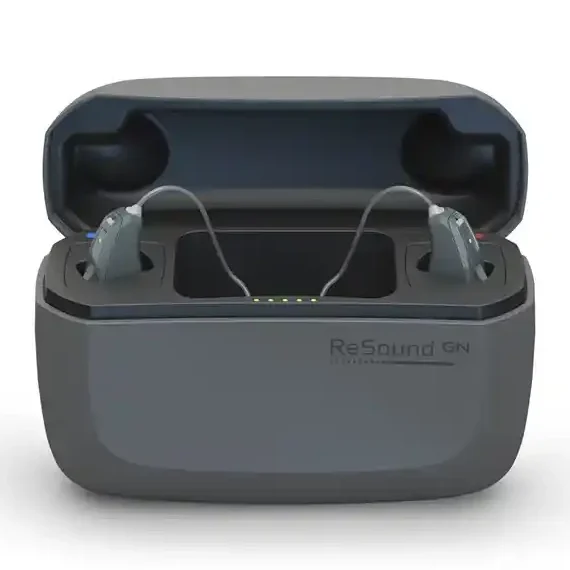
- Charging Stations: Some hearing aid manufacturers offer dedicated charging stations that can simultaneously charge multiple rechargeable batteries, providing a convenient central hub for charging. Some brands (like OTICON, depending on the model) offer the possibility of using disposable batteries in the rechargeable device.
Notable Rechargeable Hearing Aid Battery Brands
In the realm of rechargeable hearing aid batteries, certain brands have gained prominence for their performance and reliability.
Notable rechargeable battery brands:
- Phonak: Known for its innovation in the hearing aid industry, Phonak offers rechargeable solutions that align with their commitment to advanced technology and user convenience.
- Signia: With a focus on delivering cutting-edge hearing solutions, Signia provides rechargeable batteries known for their longevity and compatibility with a range of hearing aid models.
- ReSound: Recognized for its commitment to providing accessible and high-quality hearing care, ReSound offers rechargeable options that cater to diverse user needs.
- Oticon: Renowned for its emphasis on performance and user-centric design, Oticon’s Rechargeable batteries align with their mission to enhance the lives of individuals with hearing loss.
