
Assistive Listening Devices: Types, Benefits, and Usage
By
Written On
ALDs can include hearing aids, personal FM systems, loop systems, and more. Each technology has its unique features and applications, making them suitable for different situations and user requirements. Hearing amplifiers, a popular category of ALDs, have garnered attention for their affordability and ease of use. These devices are often cost-effective compared to traditional hearing aids and can be a viable option for individuals on a budget. Their user-friendly nature makes them accessible to a wide range of users. However, It is crucial to evaluate the quality and specifications of these devices to ensure they meet individual hearing needs. When considering purchasing hearing assistive technology, potential buyers can explore various sources, including brick-and-mortar stores and online retailers. Researching and consulting with audiologists can guide individuals in finding the most suitable ALD for their specific hearing requirements.
What is an Assistive Listening Device?
An Assistive Listening Device (ALD) improves communication for individuals with hearing impairments. It amplifies sound, reduces background noise, and overcomes any distance limitations.
The main difference between an Assistive Listening Device and a hearing aid is their respective purposes. Hearing aids are for individuals with hearing loss. Assistive Listening Devices are for individuals with or without hearing aids. Assistive Listening Devices enhance the listening experience in specific situations where hearing aids alone may not be sufficient.
How Assistive Listening Systems Work?
An assisted listening device typically consists of several components.
Here are the main elements
1. Microphone: The microphone captures sound from the environment. It can be an integral part of the device or an external microphone. The microphone converts sound waves into electrical signals.
2. Transmitter: In systems with wireless technology, a transmitter sends the audio signal from the microphone to the receiver or directly to the user’s device, such as a headset or hearing aid.
3. Receiver: The receiver, often a part of the user’s assisted listening device, receives the transmitted audio signal and processes it for playback. Some systems have a separate receiver unit, while others integrate it.
4. Signal Processing: Assisted listening devices include signal processing features to enhance the audio. These features can involve noise reduction, feedback suppression, and equalization to tailor the sound to the user’s hearing needs.
5. Amplifier: The amplifier increases the volume of the audio signal. The signal is louder and more audible to the user. The amplification level is typically adjustable to suit the user’s preferences and hearing requirements.
6. Headphones/Earphones or Hearing Aid
7. Controls: Users can regularly adjust volume, tone, and other settings to customize the listening experience according to their preferences and hearing needs. Controls may be physical buttons or digital parameters.
How Does The Process Work?
1. Sound Capture: The microphone captures sound from the surrounding environment. The external microphone can be near a speaker or presenter.
2. Transmitting the Signal: In a wireless system, the transmitter sends the audio signal from the microphone to the receiver. These wireless technologies involve radio frequency (RF), Bluetooth, or infrared.
3. Signal Processing: The receiver or the user’s device processes the audio signal.
4. Amplification: to the user’s needs.
5. Audio Delivery: The user can control the volume and other settings to fine-tune the listening experience.
What are the Different Technologies Part of Assistive Listening Devices?
Assisted listening devices incorporate various technologies to enhance the listening experience for individuals with hearing impairments. Here are some of the different technologies involved in assisted listening devices:
1. Microphone Technology: Advanced microphones may include noise-canceling or directional features for improved audio clarity.
2. Wireless Connectivity: These technologies can include:
– Bluetooth.
– Radio Frequency (RF): RF technology is used in systems that require longer-range communication between the transmitter and receiver.
– Infrared (IR): Infrared technology is commonly used in venues like theaters, providing line-of-sight audio transmission.
3. Digital Signal Processing (DSP): DSP technology process and optimize audio signals. It can include features like noise reduction, feedback suppression, and equalization.
4. Amplification Technology.
5. Telecoil (T-Coil) Technology: Telecoil technology is integrated into hearing aids and some assisted listening devices. It allows users to connect to hearing loop systems, commonly found in theaters and public venues, to receive audio directly to their hearing aids.
6. Rechargeable Batteries: Some devices use rechargeable batteries or are powered by rechargeable battery packs, reducing the need for disposable batteries and providing longer usage times.
7. Remote Control and Smartphone Apps: These technologies allow users to adjust settings discreetly, customize the listening experience, and monitor the device using a remote control or a smartphone app.
8. Captioning and Subtitling: Some assisted listening devices include displays or interfaces that provide text captions or subtitles, enhancing content comprehension.
9. Hearing Aid Compatibility: Assisted listening systems can be designed to work seamlessly with hearing aids, allowing the user to stream enhanced audio directly to their hearing aids.
10. Environmental Noise Management: Devices may adapt to varying sound environments by adjusting settings automatically, switching between indoor and outdoor modes, or reducing background noise.
11. Microprocessor Control: Microprocessors manage the operation of the device, handling tasks like audio processing, user controls, and wireless connectivity.
What Are The Different ALDs Types
Hardwired Assistive Listening Devices
Hardwired Assistive Listening Devices (ALDs) are physically connected to the audio source using wires or cables.Like:
Wired Headphones: Some ALDs use wired headphones or earphones connected to a device that directly processes and amplifies sound.
| Pros: | Cons: |
|---|---|
| 1. Reliability: Hardwired systems are generally more reliable because they are not susceptible to interference, signal dropouts, or wireless connectivity issues | 1. Limited Mobility: Users are restricted to the physical location where the hardwired system is installed. |
| 2. Consistency: The audio quality remains consistent as long as the connections and components are maintained. | 2. Installation Complexity: Setting up hardwired systems, such as hearing loops, can be more complex and may require professional installation, which can be expensive. |
| 3. Security: There is no risk of eavesdropping or interference from other electronic devices, ensuring privacy. | 3. Dependency on Compatible Devices: Individuals must have telecoil-compatible hearing aids or cochlear implants to benefit from hardwired systems like hearing loops. |
| 4. Ease of Use: Users may find hardwired systems simple to use, as they often require minimal setup and no pairing or troubleshooting of wireless connections. | 4. Inflexibility: Hardwired systems are not easily reconfigurable or portable, making them less versatile for changing environments. |
| 5. Intrusive Cabling: The cables or wiring may be visually unappealing or physically inconvenient in a space. |
Wireless Assistive Listening Devices
Wireless Assistive Listening Devices (ALDs) are a category of assistive technology relying on wireless technologies to transmit audio signals from a source to the user.
Here are examples of wireless ALDs:
1. FM Systems: Frequency modulation (FM) systems use radio frequencies to transmit sound from a microphone (worn by the speaker) to a receiver (worn by the user) through wireless signals. This technology is implemented in classrooms, conference settings, and theaters.
2. Infrared Systems: Infrared ALDs transmit audio signals using infrared light. These systems are often used in theaters, large conference rooms, and courtrooms.
3. Bluetooth and Inductive Neckloops: Bluetooth technology allows users to stream audio from compatible devices, such as smartphones or televisions, directly to their hearing aids or specialized receivers. Inductive neck loops are wearable loops that use electromagnetic fields to deliver sound to hearing aids or cochlear implants.
| Pros of Wireless ALDs: | Cons of Wireless ALDs: |
|---|---|
| 1. Mobility and Flexibility: Wireless ALDs provide the freedom to move around within the range of the transmitter. | 1. Interference: Wireless systems can be susceptible to interference from other electronic devices or physical obstacles, leading to occasional signal dropouts. |
| 2. User-Friendly: They are easy to set up and use, with minimal cables and connections required. | 2. Battery Dependency: Users must ensure their receivers or devices have a sufficient battery charge or power source to receive the audio signal. |
| 3. Compatibility: Many modern hearing aids and cochlear implants come equipped with wireless connectivity (e.g., Bluetooth), making it easy for users to connect and stream audio directly to their devices. | 3. Pairing and Compatibility Issues: Some users may encounter challenges with pairing, compatibility, and troubleshooting, especially when using third-party devices or apps. |
| 4. Privacy: Wireless systems reduce the risk of eavesdropping, as the audio signal is confined to the user’s receiver or hearing aid. | 4. Setup Complexity: Certain wireless systems, like Bluetooth connections, may require initial setup and configuration, which can be daunting for some users. |
| 5. Cost: Some wireless ALD systems can be more expensive than hardwired alternatives, especially when considering the need for additional accessories or compatible hearing aids. |
Audio Induction or Hearing Loop
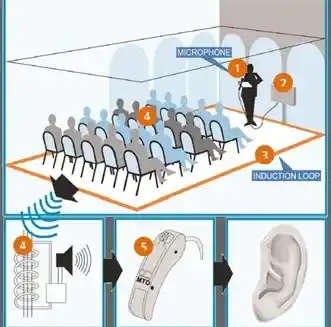
An Audio Induction Loop (Hearing Loop) is an assistive listening system that uses electromagnetic technology to transmit sound directly into the telecoil-equipped hearing aids or cochlear implants of individuals with hearing impairments.
A telecoil, often abbreviated as T-coil or T-switch, is a small coil of wire that uses electromagnetic signals to transmit audio.
| Pros of Audio Induction (Hearing Loop) Systems: | Cons of Audio Induction (Hearing Loop) Systems: |
|---|---|
| 1. Clear and Direct Sound: Hearing loops provide a direct, clear, and interference-free audio signal to users with telecoil-compatible hearing devices. | 1. Dependency on Telecoil-Equipped Devices |
| 2. Universal Accessibility: They are inclusive and accessible to individuals with hearing aids or cochlear implants equipped with telecoils, making them widely usable. | 2. Installation Complexity: Proper installation and calibration of hearing loops require expertise, and the installation process can be expensive. |
| 3. Reduced Background Noise: the user can focus on the primary audio source. | 3. Visual Intrusiveness: The presence of loop wires or mats can be visually intrusive in some settings, potentially affecting the aesthetics of the space. |
| 4. No Additional Equipment: Users don’t need to wear extra receivers or headphones. | 4. Interference from Metallic Objects: Metallic objects and structures can cause electromagnetic interference in the hearing loop system, modifying the audio quality. |
| 5. Privacy: The audio is delivered privately to the user, reducing the risk of eavesdropping. | 5. Limited Mobility: Users must remain within the looped area to receive the signal, limiting their mobility within the listening environment. |
| 6. Ease of Use: Once the telecoil is activated, users typically only need to switch to the T-coil setting on their hearing devices to benefit from the hearing loop. | 6. Not Suitable for All Environments: Hearing loops are most effective in fixed-seating environments where users can anticipate the loop’s location. They may be less suitable for dynamic or large open spaces. |
| 7. Long-Range Coverage: Hearing loops can cover relatively large areas or seating sections, accommodating numerous users simultaneously. | 7. Telecoil Activation: Some users may need assistance or instruction to activate the telecoil setting on their hearing devices |
Hearing Amplifier with Noise Reduction:
A hearing amplifier with noise reduction is designed to help individuals with hearing impairments amplify sound while reducing background noise.
| Pros: | Cons: |
|---|---|
| 1. Improved hearing: The main advantage of a hearing amplifier with noise reduction is that it enhances speech perception by selectively amplifying key frequencies important for understanding speech while minimizing background noise interference. | 1. Limited customization: Unlike hearing aids, hearing amplifiers with noise reduction may have limited customization options, and their performance might not be as tailored to specific hearing needs. |
| 2. Listening in different environments: These devices are typically equipped with multiple listening modes or settings that can be adjusted to adapt to different environments, such as noisy restaurants, crowded gatherings, or quiet conversations. | 2. Not suitable for severe hearing loss: These devices are generally designed for individuals with mild to moderate hearing impairments and may not be effective for individuals with severe or profound hearing loss. |
| 3. Comfortable to wear: Most modern hearing amplifiers with noise reduction are ergonomically designed and lightweight, making them comfortable to wear for extended periods. | 3. Lack of medical guidance: Hearing amplifiers with noise reduction are available over the counter or online, which means users may not receive professional guidance and evaluation from a certified audiologist or hearing care professional. |
| 4. Discreet appearance: Many newly developed hearing amplifiers are designed to be smaller and less noticeable, offering a more discreet hearing solution. | 4. Battery dependency: Most hearing amplifiers require batteries to function, and regular battery replacement may be necessary, posing ongoing costs and inconvenience for users. |
| 5. Affordable alternative: Compared to hearing aids, hearing amplifiers with noise reduction are generally more affordable and accessible, providing an economical solution for individuals with mild to moderate hearing loss. | 5. Potential misuse: Some individuals may misinterpret hearing amplifiers with noise reduction as alternatives to proper medical evaluations and professional hearing care, delaying appropriate intervention when needed. |
Assistive Listening Devices FM System:
An Assistive Listening Devices FM System is a listening technology using frequency modulation. It consists of a transmitter and a receiver that work in conjunction to transmit audio signals wirelessly.
| Pros: | Cons: |
|---|---|
| 1. Improved sound quality: FM systems offer enhanced sound clarity, making it easier for people with hearing impairments to understand speech and other audio signals. | 1. Dependence on the audio source: FM systems require the audio source, such as a teacher’s microphone, to be equipped with a transmitter. If the audio source does not have a compatible transmitter, the system cannot be utilized. |
| 2. Reduction of background noise: The direct transmission of sound to the user’s hearing aid or headphones minimizes the impact of background noise, improving the listening experience. | 2. Potential interference: FM systems may experience interference from other electronic devices operating in the same frequency range, which can affect audio quality. |
| 3. Increased range: These systems can transmit audio signals over a considerable distance, allowing users to maintain a connection with the audio source even at a distance. | 3. Limited availability: FM systems may not always be readily available in public spaces, limiting their usage options for individuals with hearing impairments outside of familiar settings. |
Assistive Listening DM (Digital Modulation) System:
DM is a modulation technique where analog signals are converted into digital form and transmitted using different digital modulation schemes. In a DM system, the signal is represented by binary digits (bits) rather than continuous waveforms.
| Pros: | Cons: |
|---|---|
| 1. Noise resistance: Digital modulation techniques can handle noise better than analog modulation techniques, as digital signals can be accurately reconstructed even in the presence of noise. | 1. Increased complexity: Digital modulation systems are generally more complex in terms of encoding, decoding, and processing compared to analog modulation systems. This complexity can lead to higher equipment costs and increased power consumption. |
| 2. Efficient use of bandwidth: Digital modulation techniques allow efficient utilization of the available bandwidth by employing various modulation schemes and compression techniques. This modulation enables more information within a given bandwidth. | 2. Delay in transmission: Due to the encoding and decoding processes involved, digital modulation systems introduce some transmission delay. Real-time communication scenarios, like live broadcasting or voice/video calls, can be affected by this delay. |
| 3. Error detection and correction: Digital modulation systems often include error detection and correction mechanisms, ensuring reliable transmission by detecting and correcting errors during reception. |
Assistive Listening Infrared Systems
The remote control emits infrared signals that are received by a sensor located on the device, enabling users to control the device’s functions wirelessly.
| Pros: | Cons: |
|---|---|
| 1. Wireless Control: Infrared systems provide wireless communication and control, allowing users to operate devices remotely without the need for physical connections. | 1. Limited Range: Infrared signals have a limited range and require a clear line of sight between the sending and receiving devices. Obstacles such as walls or furniture can hinder communication. |
| 2. Low Cost: Infrared technology is relatively inexpensive to implement and has been widely adopted in consumer electronics due to its cost-effectiveness. | 2. Directional Communication: Infrared communication requires devices to be pointed directly at each other for effective transmission and reception, making it less convenient and requiring proper alignment. |
| 3. Immunity to Interference: Infrared signals are less susceptible to interference from other devices or radio frequencies, ensuring reliable and uninterrupted operation. | 3. Sensitivity to Sunlight: Strong sunlight can interfere with infrared signals, potentially causing inaccuracies or disruptions in communication. |
Overall, infrared systems offer wireless control and reliable communication at a relatively low cost. However, their limited range, directional communication, and sensitivity to sunlight can be considered drawbacks in certain scenarios.
Bluetooth Microphones
Bluetooth microphones are wireless audio devices that use Bluetooth technology to transmit audio signals from a microphone to a receiver. They eliminate the need for cables, offering convenience and freedom of movement.
| Pros: | Cons: |
|---|---|
| 1. Wireless Convenience: Bluetooth microphones provide freedom of movement and eliminate the hassle of dealing with tangled cables. | 1. Audio Quality: Bluetooth microphones may not provide the same level of audio quality as wired microphones, as the wireless transmission can introduce latency and compression. |
| 2. Easy Connectivity: They can connect quickly and seamlessly with Bluetooth-enabled devices such as smartphones, tablets, laptops, and speakers. | 2. Range Limitations: Bluetooth connectivity has a limited range, typically around 30 feet. Therefore, if the receiver or device is too far away, the microphone signal might become weak or drop altogether. |
| 3. Versatility: Bluetooth microphones can be used for various purposes, including recording podcasts, delivering speeches, conducting interviews, singing karaoke, and more. | 3. Battery Life: Bluetooth microphones require batteries or charging, which means they have a limited runtime. This can be a disadvantage for long recording sessions or performances. |
| 4. Portability: These microphones are often compact and lightweight, making them easy to transport and carry around. | 4. Interference: Bluetooth signals can be affected by interference from other devices or obstacles like walls, leading to signal dropouts or audio disturbances. |
| 5. User-Friendly: Most Bluetooth microphones are designed to be user-friendly, with simple pairing processes and intuitive controls. | 5. Compatibility: While most devices support Bluetooth connectivity, older or non-Bluetooth devices might not be compatible, restricting their use in some situations. |
Are Hearing Amplifiers Affordable and Easy to Use?
They are different from hearing aids, as they are not prescribed or customized for a specific individual’s hearing needs.
Three unique aspects of hearing amplifiers are:
1) Accessibility: Hearing amplifiers are readily available for purchase over the counter or online without the need for a specialist’s prescription or fitting.
2) Cost-effective: In comparison to hearing aids, hearing amplifiers are generally more affordable, making them a viable option for individuals seeking a temporary or budget-friendly solution.
3) User-adjustable controls: Hearing amplifiers often come with various volume and tone controls that allow users to manipulate sound settings based on their preferences and hearing requirements.
Here are some examples of hearing amplifiers:
1) Ear glasses: These are unique hearing amplifiers that resemble traditional eyeglasses. They integrate small speakers or microphones in the frames to amplify sounds and transmit them to the wearer’s ears.
2) Pocket-sized devices: Some hearing amplifiers are designed in compact, easy-to-carry forms that can fit within a pocket. These discrete amplifiers often rely on microphones to capture sound and amplify it through compact speakers or earphones.
3) Smartphone Apps: With the technological advancements in smartphones, various apps now exist that function as hearing amplifiers. These apps utilize the phone’s microphone to pick up sounds, amplify them, and stream them directly to the user’s headphones or earbuds.
Different Types of Assistive Listening Devices
Personal amplifiers
Personal amplifiers are usually small, portable, and wireless, aiming to improve the ability to hear sounds such as conversations, music, or television.
Two examples of personal amplifiers are:
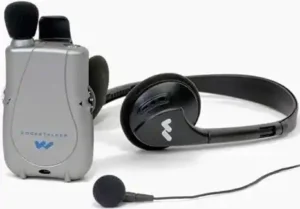
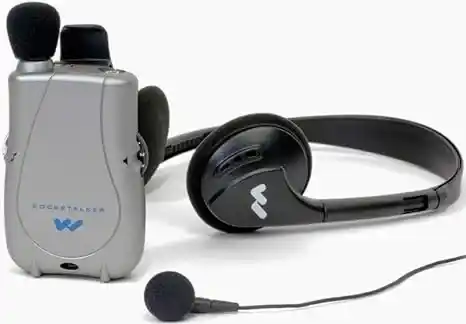
1. Pocketalker Ultra by Williams Sound: This device is a compact amplifier that users can wear around the neck or place in their pocket. It includes a microphone for picking up sounds and amplifying them, providing clear and amplified audio to the user.
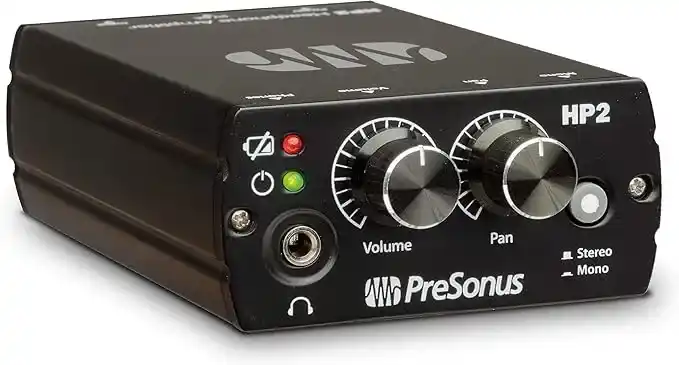
2. PreSonus HP2 Personal Headphone Amplifier: This personal amplifier incorporates a microphone to capture sounds and amplify them according to the user’s preference. It also features noise reduction technology to filter out unwanted background noise and enhance the clarity of speech.
| Pros: | Cons: |
|---|---|
| 1. Improved speech intelligibility: Personal amplifiers make it easier for individuals with hearing loss to understand and follow conversations by amplifying the speaker’s voice. | 1. Limited range: Personal amplifiers typically have a limited range at which they can effectively amplify sounds. Users must stay within a certain proximity to the sound source to receive clear amplification. |
| 2. Portable and discreet: These devices are compact and can be easily carried around, allowing users to bring them wherever they go without drawing attention. | 2. Dependence on additional equipment: Some personal amplifiers require the use of headphones or neck loops to transmit the amplified sound directly to the user’s ears, which may be an extra inconvenience. |
| 3. Customizable settings: Many personal amplifiers offer adjustable volume control and tone settings, allowing users to tailor the amplification to their specific hearing needs. | 3. Interference from background noise: While personal amplifiers aim to amplify targeted sounds, they may still pick up unwanted background noise, which can affect the overall listening experience. |
Hearing amplifier
Hearing amplifier-compatible phones are mobile phones that are specifically designed to work with hearing amplifiers or hearing aids. These phones have features that enable users with hearing impairments to have a better auditory experience during phone conversations.
Telecoils, on the other hand, are small devices built into hearing aids or cochlear implants that can pick up magnetic signals and convert them into sound. They allow users to directly connect their hearing aids to compatible telephones, public address systems, or other assisted listening devices.
Product examples of Hearing amplifier-compatible phones:
1. iPhone: Apple has introduced numerous features that make their iPhones compatible with hearing aids and amplifiers. The iPhone offers adjustable settings for call audio, ringtones, and other audio alerts. It is also compatible with Made for iPhone hearing aids that connect wirelessly to the device.
2. Samsung Galaxy smartphones: Samsung has also developed phones that are compatible with hearing aids and amplifiers. These devices offer the option to adjust call audio and alerts for people with different hearing abilities. Samsung phones are also compatible with various Bluetooth-enabled hearing aids.
| Pros: | Cons: |
|---|---|
| 1. Enhanced sound quality: These devices improve the sound quality for individuals with hearing impairments, allowing them to have clear and audible phone conversations and a better overall auditory experience. | 1. Limited compatibility: Some phones or hearing aids may not be universally compatible with all hearing amplifiers or telecoils, which can create difficulties for users in finding the right combination that works for them. |
| 2. Improved accessibility: Hearing amplifier-compatible phones and telecoils provide individuals with hearing impairments easy access to communication, ensuring they can stay connected with their loved ones and participate in daily activities without any limitations. | 2. Reliance on additional devices: In order to use telecoils, users are required to have hearing aids or cochlear implants with telecoil functionality. This means individuals without these devices may not be able to benefit from the direct connection offered by telecoils. |
| 3. Customizable settings: These devices often offer adjustable settings for volume, tone, and other audio parameters, enabling users to personalize their hearing experience to suit their needs and preferences. | 3. Cost: Hearing amplifier-compatible phones and telecoils can be more expensive than regular phones or hearing aids, potentially posing a financial challenge for individuals with hearing impairments. |
TV listening systems
TV listening systems, refer to devices designed to enhance TV audio for individuals with hearing impairments. These systems allow users to amplify and clarify television sound, providing a more accessible and enjoyable viewing experience.
Two examples of TV listening systems are:
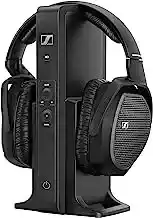
1. Sennheiser RS 165: This wireless TV listening system offers exceptional sound clarity and personalized audio settings. It has a range of up to 30 meters, allowing users to move around freely while listening. The RS 165 also features multiple connectivity options and is compatible with both digital and analog audio sources.
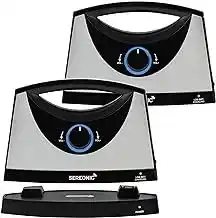
2. SEREONIC Dual Wireless TV Listening Speaker: This portable TV listening system is suitable for users who prefer flexibility and mobility. The TV SoundBox wirelessly transmits sound up to 100 feet, enabling users to enjoy TV audio from different locations within their homes. It provides high-quality sound amplification and includes a lightweight wireless headset for comfortable wearing.
| Pros of TV listening systems: | Cons of TV listening systems: |
|---|---|
| 1. Improved Audio Quality: These systems enhance TV sound, making dialogue and other audio elements clearer and more distinguishable, thus improving the overall viewing experience for individuals with hearing impairments. | 1. Disturbance to Others: Some TV listening systems, particularly if using headphones or earbuds, may result in the audio being amplified to a level that could disturb others nearby who are not using the system. |
| 2. Personalized Listening Experience: Many TV listening systems offer customizable sound settings, allowing users to adjust volume, tone, and balance according to their specific hearing needs. This provides a personalized and comfortable audio experience. | 2. Limited Application: These systems are designed specifically for TV audio enhancement and may not be compatible with all television models or other audio sources. |
| 3. Freedom of Movement: Wireless TV listening systems enable users to move around the room or even different rooms without compromising audio quality. This flexibility allows users to continue enjoying their favorite TV shows and movies without being confined to a specific location. | 3. Cost: TV listening systems can vary in price, and high-quality systems may be relatively expensive compared to other assistive listening solutions. The cost factor may limit accessibility for some individuals. |
Note: The provided product examples and pros/cons are for illustrative purposes only, and there are various other TV listening systems available with different features and advantages.
Telephone amplifiers
Telephone amplifiers amplify the sound from telephone conversations, making it easier for individuals with hearing impairments to communicate over the phone. These amplifiers generally consist of a base unit that connects to the telephone line and a separate handset or headset that transmits the amplified sound to the user.
Two examples of telephone amplifiers in the market are:
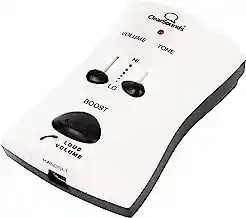
1. ClearSounds WIL95 Portable Telephone Amplifier: This amplifier easily connects the phone handset and base, offering up to 40dB amplification. It provides adjustable tone control and volume control, allowing users to customize their listening experience.
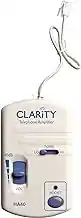
2. Clarity HA40 Portable Phone Handset Amplifier: This amplifier is a lightweight and compact device that can enhance the volume of the telephone handset by up to 40 dB. It simply attaches to the handset with its rubber strap and comes with a rotary volume control for easy adjustment.
| Pros of Telephone Amplifiers: | Cons of Telephone Amplifiers: |
|---|---|
| 1. Increased Volume: Amplifies the sound, making it easier for individuals with hearing impairments to hear phone conversations clearly. | 1. Limited Functionality: Telephone amplifiers serve the sole purpose of amplifying phone conversations and may not offer other advanced features like call recording or Bluetooth connectivity. |
| 2. Customizable Settings: Most telephone amplifiers offer volume and tone control features, allowing users to adjust the settings to their preferences. | 2. Compatibility Issues: Some telephone amplifiers may not be compatible with all telephone models or require specific connection types, limiting their usability. |
| 3. Portable and Easy to Use: Many telephone amplifiers are lightweight and compact, making them portable and convenient to use with various telephone models. | 3. Battery Dependency: Amplifiers that are not powered by the telephone line may require batteries or power adapters, adding a level of maintenance and dependency on power sources. |
Telephone IP relay service
Telephone IP relay service refers to a telecommunication service that allows people who are deaf, hard of hearing, or speech-impaired to make telephone calls using a computer or mobile device with internet access. Users can type their conversation, which is converted into voice output for the hearing party, and the spoken response is relayed back as text to the user.
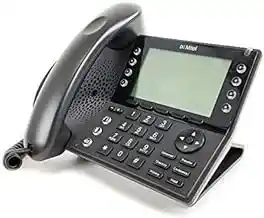
Two product examples of Telephone IP relay services are:
1. Purple Communications: Purple offers an IP relay service called SmartVP that enables individuals to make relay calls using their computer, smartphone, or tablet. It provides real-time text conversations with voice output for both parties involved.
2. Sorenson Communications: Sorenson offers a popular IP relay service called InTouch that provides users with video relay calls using sign language interpreters. Users sign to an interpreter, who then voices the conversation to the hearing recipient. The interpreter also translates the spoken response back into sign language for the user to read.
| Pros of Telephone IP relay service: | Cons of Telephone IP relay service: |
|---|---|
| 1. Accessibility: It provides an accessible and inclusive communication option for individuals who are deaf, hard of hearing, or speech-impaired, allowing them to independently engage in phone conversations. | 1. Reliance on the Internet: These services depend on a stable Internet connection, so any disruptions or low connectivity would affect the quality and reliability of the communication. |
| 2. Real-time Communication: Telephone IP relay service enables real-time communication between individuals using text or sign language, allowing for efficient and direct interaction. | 2. Time Delay: The process of converting text to speech and vice versa may introduce delays in the conversation, leading to possible misunderstandings or reduced efficiency during telephone calls. |
| 3. Privacy and Convenience: Users can make relay calls from the comfort and privacy of their own devices, eliminating the need for additional assistive listening devices or specialized phone equipment. | 3. Technology Barriers: Some individuals may face challenges in adapting to the technology required for using Telephone IP relay services, such as the need to learn different interfaces or operating systems for various devices. |
Amplified and captioned telephones
Amplified and captioned telephones aid individuals with hearing loss by enhancing sound quality and providing visual captions during telephone conversations.
Two examples of amplified and captioned telephones available in the market are:
1. CaptionCall: It provides captions of the conversation in real time on a large, easy-to-read screen. It amplifies incoming sounds and allows users to listen and read simultaneously.
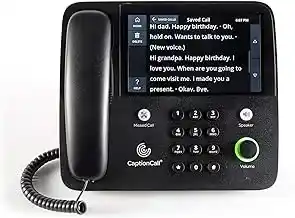
2. Clarity Ensemble: This telephone offers amplified sound, allowing users to increase the volume to a level suitable for their hearing needs. It also features captions displayed on a built-in screen.
| Pros of Amplified and Captioned Telephones: | Cons of Amplified and Captioned Telephones: |
|---|---|
| 1. Improved communication: The combination of amplified sound and visual captions allows individuals with hearing loss to better comprehend conversations during phone calls. | 1. Cost: Some amplified and captioned telephones can be pricey, making them less affordable for individuals on limited budgets. |
| 2. Independent communication: These devices empower users to communicate independently without relying on others for assistance, enhancing their overall quality of life. | 2. Technological limitations: Occasionally, there may be technological glitches or errors in the captions displayed on these devices, which could impact the accuracy of the communication. |
| 3. Compliance with ADA regulations: Amplified and captioned telephones ensure accessibility and compliance with the Americans with Disabilities Act (ADA), which mandates equal communication opportunities for people with hearing loss. | 3. Learning curve: The use of amplified and captioned telephones may require some initial adjustment or training to become proficient with the features and functions, particularly for older users who may not be as tech-savvy. |
Alerting devices
Alerting devices alert individuals with hearing loss to various environmental sounds or events. These devices help to ensure the safety and well-being of individuals who might not be able to hear alarms, doorbells, or other important alerts.
Here are two examples of alerting devices:
1. Sonic Alert HomeAware Signaling System: This device is a comprehensive alerting system that includes a customizable bed shaker, loud alarm signal, flashing lights, and a large display panel with scrolling text. Various home appliances and transmitters can be connected to it to alert users of phone calls, fire alarms, and weather alerts.
2. Silent Call Signature Series Sidekick II Receiver: This portable receiver is designed to function as an alerting device, notifying individuals about important alerts through a combination of loud sounds, bright flashing lights, and vibration. It can be connected wirelessly to a wide range of transmitters, including fire alarms and doorbells.
| Pros of Alerting Devices: | Cons of Alerting Devices: |
|---|---|
| 1. Improved Safety: Alerting devices provide individuals with hearing loss the ability to be promptly alerted to important sounds or events, allowing for increased safety and security in their environment. | 1. Cost: Some alerting devices can be quite expensive, making them unaffordable for some individuals with hearing loss. |
| 2. Increased Independence: These devices help individuals to live independently by making them aware of various alerts, allowing them to respond accordingly without relying on others for assistance. | 2. Accessibility: Certain alerting devices may require technical knowledge to install and operate, which can make them less accessible for users who are not tech-savvy. |
| 3. Customization and Flexibility: Alerting devices often offer customizable features, such as tone and volume adjustments, ensuring that they can be tailored to the specific needs and preferences of the user. | 3. Limitations: Alerting devices have limitations in terms of range, as some may only work within a specific distance from the device or transmitter, restricting their use in larger areas or when away from home. |
Wearable sensory/tactile devices
Wearable sensory/tactile devices convert sounds into touch sensations. These devices aim to enhance the auditory experience of individuals with hearing loss by providing additional tactile cues and sensory feedback. By converting sounds into vibratory patterns or tactile signals, these devices allow individuals with hearing loss to perceive and understand the surrounding auditory environment.
Product examples of wearable sensory/tactile devices for hearing loss include:
1. SoundShirt by CuteCircuit: The SoundShirt is a wearable technology designed for deaf individuals. It captures sound from the environment and transforms it into vibrations and gentle pulses. Users can feel the music or sounds on their skin, providing a unique sensory experience.
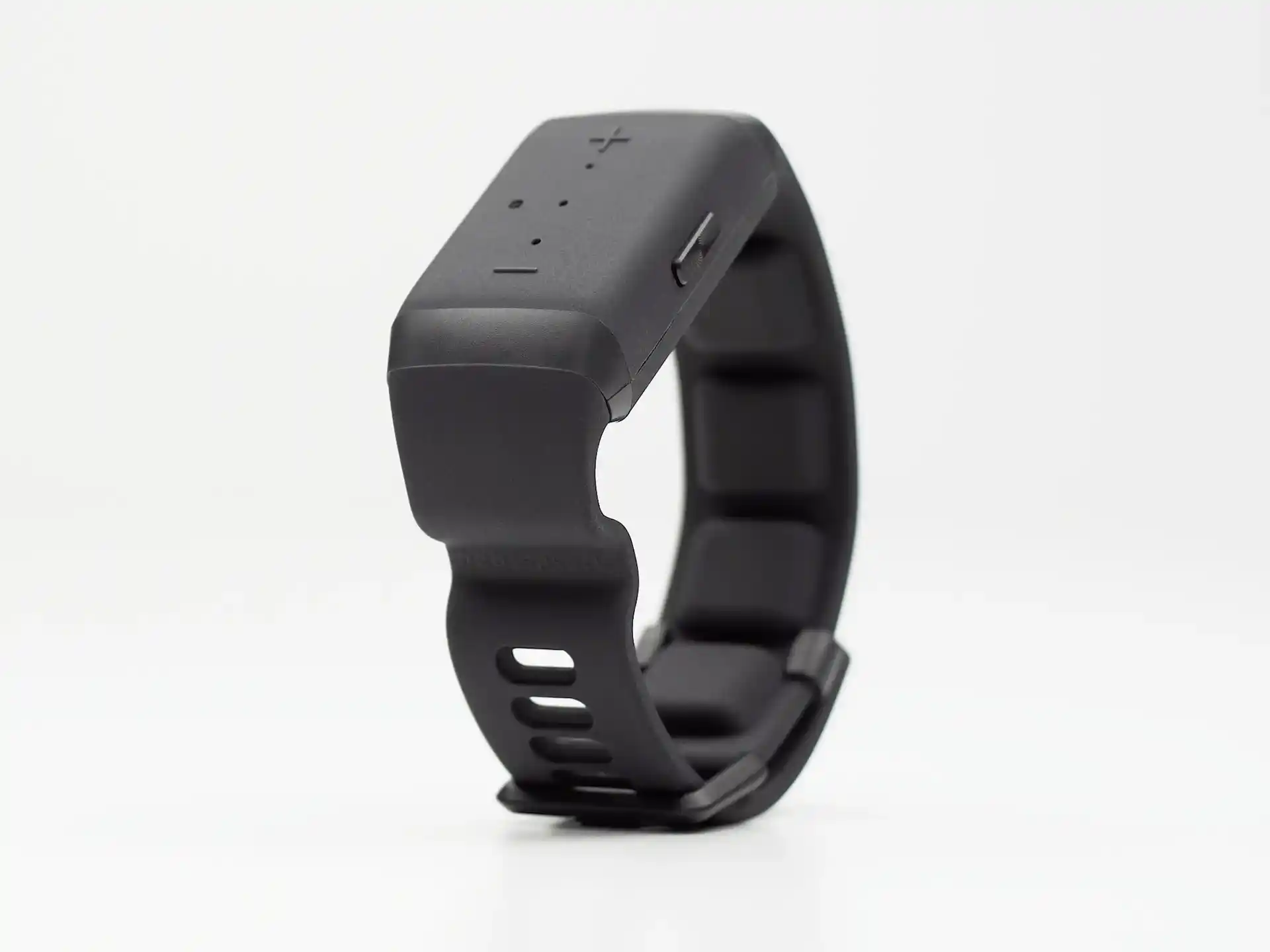
2. Tactile Communication System by Neosensory: This device focuses on enhancing communication for individuals with hearing loss. It consists of a wristband that converts speech into vibrations, allowing users to interpret spoken words through tactile sensations.
| Pros of Wearable Sensory/Tactile Devices for Hearing Loss: | Cons of Wearable Sensory/Tactile Devices for Hearing Loss: |
|---|---|
| 1. Improved communication: These devices can enhance communication for individuals with hearing loss by providing additional sensory cues, enabling them to better understand conversations and sounds. | 1. Limited sound accuracy: The conversion of sound into tactile feedback may not completely replicate the quality and nuances of the original audio, potentially resulting in a loss of some auditory information. |
| 2. Increased environmental awareness: The tactile feedback provided by these devices allows users to perceive environmental sounds, including alarms or warning signals, enhancing their overall safety. | 2. Learning curve: Users may require time and practice to fully familiarize themselves with the tactile feedback provided by these devices. Adjusting to this new sensory experience can be challenging for some individuals. |
| 3. Personalized experience: Wearable sensory/tactile devices can be customized to meet individuals’ specific needs, providing tailored tactile feedback to suit their preferences. | 3. Functional limitations: The effectiveness of wearable sensory/tactile devices may vary depending on the severity and type of hearing loss. Individuals with profound or complex hearing impairments may not experience the same level of benefit as those with milder forms of hearing loss. |
Assistive listening systems for public settings
Assistive listening systems for public settings are designed to enhance the listening experience for individuals with hearing impairments in various public spaces. These systems utilize assistive listening devices to transmit and amplify sound signals, making them easier for individuals with hearing loss to hear and understand.
Here are two product examples of assistive listening systems for public settings:
1. Williams Sound PPA T45NET Personal PA FM Base Station: This device functions as a transmitter in an assistive listening system. It connects to audio sources such as a microphone or audio output from a sound system and broadcasts the sound wirelessly using FM technology. The PPA T45NET is compatible with a wide range of receivers, making it suitable for environments like classrooms, theaters, and auditoriums.
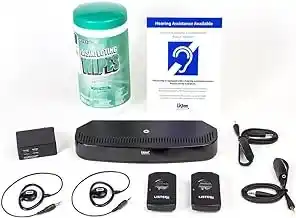
2. Listen Technologies LS-90 ListenIR iDSP Level I System, LT-84-01 Transmitter, 2x LR-4200 IR Receiver: This product is an infrared radiator that emits an infrared signal carrying audio information. It’s part of an infrared assistive listening system and is typically used in spaces where privacy and signal control are crucial, such as courtrooms and conference rooms. The LA-442 radiator offers wide-angle coverage and can be mounted on walls or ceilings.
| Pros of Assistive Listening Systems for Public Settings: | Cons of Assistive Listening Systems for Public Settings: |
|---|---|
| 1. Improved Accessibility: These systems allow individuals with hearing impairments to access and enjoy public spaces more effectively by providing more audible and understandable sound. | 1. Compatibility Challenges: Some assistive listening devices may only be compatible with specific transmitters or receivers, creating potential limitations when integrating new equipment or upgrading existing systems. |
| 2. Personalized Listening Experience: Many assistive listening devices offer adjustable sound settings, enabling users to customize amplification levels according to their hearing needs. This personalization enhances the listening experience and ensures comfort for individuals with varying degrees of hearing loss. | 2. Cost: Establishing assistive listening systems in public settings can involve significant financial investment, including the purchase of transmitters, receivers, and other necessary equipment. This cost factor may restrict the implementation of such systems in certain locations. |
| 3. Reduced Ambient Noise Interference: Assistive listening systems often utilize wireless technology, which allows users to focus on the transmitted sound without being distracted by background noise. This feature improves speech intelligibility and comprehension. | 3. Maintenance and Management: Assistive listening systems require periodic maintenance to ensure optimal performance. Issues like battery replacement, signal interference troubleshooting, and system adjustments may need competent technical support, which can be time-consuming and costly for organizations overseeing these systems. |
Hearing Assist Devices for Churches:
Hearing assistance devices are essential for ensuring that individuals with hearing loss can fully participate in church activities, including sermons, worship, and communication.
Here are two examples of the best hearing assist devices specifically designed for churches:
1. Williams Sound PPA 457 PRO Personal PA FM Listening System:
– Pros:
– Offers crystal-clear sound quality with minimal interference.
– Portable and easy to use, suitable for large or small churches.
– Multiple channels available to accommodate multiple languages or separate events.
– Long-range capabilities (up to 1000 ft (304.8 m)) with high-quality audio transmission.
– Cons:
– Requires regular battery replacements, especially for extended use.
– Some users might experience signal drops in congested RF environments.
2. Listen Technologies LS-06 iDSP Level II Stationary RF System:
– Pros:
– Excellent sound quality, delivering clear audio to those with hearing difficulties.
– Multiple channels available to accommodate various languages or special interest groups.
– Easy installation and compatibility with an array of audio sources.
– Reliable transmission and reception, even in noisy environments.
– Cons:
– Stationary system, limited mobility range for users.
– Require users to wear individual receivers, making it necessary to have multiple units available.
– Batteries need to be replaced regularly, especially in high-usage scenarios.
Hearing Assist Devices for Theaters:
These devices are designed to amplify the sound from the stage directly into the ears of the user, allowing them to hear the dialogue and music more clearly.
Here are two examples of the best Hearing Assist Devices for theaters:
1. Williams Sound PPA 457:
Pros:
– Clear and reliable sound amplification for individuals with mild to moderate hearing loss.
– Can connect to multiple receivers, allowing multiple users to benefit simultaneously.
– Portable and easy to use, with a range of up to 150 feet.
Cons:
– May require additional accessories for optimal functionality, such as neck loops or headphones.
– Range limitations may be an issue in larger theaters or performance spaces.
– Limited battery life, requiring frequent recharging for extended usage.
2. Sennheiser Set 840-TV:
Pros:
– Excellent sound quality, providing clear and distortion-free amplification.
– Easy setup and operation, with user-friendly controls and adjustable volume.
– Long battery life, lasting up to 9 hours on a full charge.
Cons:
– Designed primarily for home theater use.
– Limited range, making it more suitable for personal use or small theater settings.
– May be more expensive compared to other options available in the market.
Hearing Assist Devices for Classrooms:
These devices can help students overcome hearing difficulties in educational settings.
Here are two examples of the best hearing assist devices for students:
1. Phonak Roger Pen:
Pros:
– Provides exceptional speech clarity, allowing students to hear their teachers and peers more effectively.
– Can be used in various environments, such as classrooms and lecture halls.
– Portable and easy to use, with a long battery life.
– Can transmit audio signals directly to the student’s hearing aids or cochlear implant.
Cons:
– Relatively expensive compared to other hearing assist devices.
– Requires additional accessories, such as receivers or FM systems, for full functionality.
– May have some interference issues in electromagnetic environments.
2. Cochlear Baha 5 Sound Processor:
Pros:
– Suitable for students with conductive or mixed hearing loss, as well as single-sided deafness.
– Allows for direct transmission of sound through bone conduction technology.
– Offers wireless connectivity to various audio sources, such as smartphones and computers.
– Water-resistant, which is advantageous for students participating in water-related activities.
Cons:
– Restricted to students who have specific hearing conditions.
– Some students may require a surgical implantation procedure.
– Costly, including the initial purchase, potential surgery, and ongoing maintenance.
Hearing Assist Devices for Conference Rooms:
These devices help overcome challenges related to background noise, distance, and room acoustics, ensuring that everyone can actively participate in the conversation.
Here are two examples of the best hearing assist devices for conference rooms:
1. Williams Sound FM 457 PRO:
Pros:
– Uses FM technology to provide crystal-clear sound quality.
– Can be easily integrated with existing infrastructure in the conference room.
– Allows multiple people to use the system simultaneously with individual receivers.
– Provides excellent coverage range, allowing users to move freely within the room.
Cons:
– Requires the purchase of additional receivers for each participant.
– May experience interference from other electronic devices operating on the same frequency.
2. Listen Technologies LS-83:
Pros:
– Incorporates infrared technology for secure and interference-free listening.
– Provides a wide transmission range, making it suitable for larger conference rooms.
– Features a compact and portable design, allowing for easy setup and transport.
– Offers integrated charging stations for the receivers, ensuring they are always charged.
Cons:
– Users need to be in the direct line of sight of the transmitter for optimal reception.
– Infrared systems can be affected by bright lights or sunlight.
– Higher cost compared to other types of assistive listening systems.
Hearing Assist Devices for Hospitals:
Hearing amplifiers used in hospitals are specialized devices designed to improve hearing for patients with hearing loss. These amplifiers are typically used in medical settings to provide immediate assistance and facilitate conversation between healthcare professionals and patients.
One example of a popular hearing amplifier used in hospitals is the ReSound LiNX Quattro. Pros of this device include its excellent sound quality, wireless connectivity to compatible devices (such as smartphones), and the ability to adjust settings remotely with the ReSound Smart 3D app.
Are These Hearing Amplifiers safe to use:
Hearing amplifiers, also known as personal sound amplification products (PSAPs), are generally safe when used as directed. However, it is important to note that PSAPs are not intended to be medical devices and should not replace a professional hearing evaluation or treatment.
To ensure the safe use of hearing amplifiers, follow these instructions:
1. Consult with a healthcare professional: If you suspect hearing loss, it is recommended to consult with an audiologist or other hearing healthcare professional.
2. Read and follow the product instructions: Each hearing amplifier may have specific usage instructions provided by the manufacturer. Read and understand these instructions carefully, and follow them accordingly.
3. Use within the recommended volume limits: Excessive amplification can cause ear discomfort, pain, or even damage.
4. Give yourself time to adjust: Sometimes, it takes time to adapt to using a hearing amplifier. Gradually increase the volume and usage time to allow your ears and brain to adjust.
5. Keep them clean and maintained: Regularly clean your hearing amplifiers as per the manufacturer’s instructions to ensure proper functioning and hygienic usage. Replace batteries or recharge them as recommended.
How to check hearing amplifier safety
To determine if hearing amplifiers are FDA-approved. It’s important to carefully read the information provided on the FDA website to get the most accurate and up-to-date details about FDA approvals and regulations for hearing amplifiers.
Are hearing amplifiers covered by insurance
Insurance coverage for hearing amplifiers may vary depending on several factors, including the specific insurance provider, the type of policy, and the individual’s hearing needs. To determine if hearing amplifiers are covered by insurance policies, you should consult your insurance provider directly or review your policy documents.
Are Hearing Amplifiers Worth the Money
When considering whether hearing amplifiers are worth the money compared with hearing aids, it is important to evaluate their features, benefits, cost, and specific hearing needs. Here are some factors to consider:
1. Hearing amplifiers: These devices are designed to amplify sounds, making them louder and more accessible. They are often available over-the-counter without the need for a prescription or a visit to an audiologist.
| Pros: | Cons: |
|---|---|
| – Lower cost: Hearing amplifiers are generally more affordable than hearing aids. | – Limited customization: Hearing amplifiers are not tailored to individual hearing needs as they lack professional programming. |
| – Accessibility: They can be easily purchased and used without a professional evaluation. | – Noise control: They may not effectively filter background noise or enhance speech intelligibility like hearing aids can. |
| – Convenience: No need for appointments with audiologists or specialists. | – Lack of adjustment and fit: Amplifiers might not fit properly, leading to discomfort. |
2. Hearing aids: These medical devices are prescribed and fitted by professionals based on an individual’s specific hearing requirements. They typically come with advanced technologies and features.
| Pros: | Cons: |
|---|---|
| – Customization: Hearing aids are individually programmed to accommodate your unique hearing loss and preferences. | – Higher cost: Hearing aids are mostly more expensive than hearing amplifiers due to the advanced technology and professional services involved. |
| – Better sound quality: Hearing aids provide more precise amplification and noise reduction, enhancing speech understanding in various environments | – Accessibility: Obtaining hearing aids may require visiting an audiologist, which can involve appointments and potential waiting times. |
| – Professional support: Audiologists can ensure proper fitting, adjustment, and ongoing care. |
The decision between hearing amplifiers and hearing aids ultimately depends on individual factors such as the severity of the hearing loss, specific hearing needs, budget, and preference for professional guidance. If your hearing loss is mild, and you prefer an affordable solution for occasional use, a hearing amplifier could be worth considering.
Does a hearing amplifier replace a hearing aid?
Hearing amplifiers are generally not recommended as a replacement for hearing aids.
Here’s why:
1. Amplification capability: Hearing amplifiers often have limited amplification capabilities compared to hearing aids. Hearing aids are specifically designed to amplify sounds based on the individual’s hearing loss and provide a tailored solution, whereas amplifiers usually offer a one-size-fits-all approach.
2. Personalized settings: Hearing aids can be customized and programmed by audiologists to address specific hearing requirements of the individual.
3. Safety and efficacy: Hearing aids undergo rigorous testing and are regulated by government agencies to ensure their safety and efficacy.
4. Professional guidance: When using hearing aids, individuals receive guidance and support from audiologists or hearing healthcare professionals. These professionals can fine-tune the hearing aids according to the unique needs of the wearer, provide ongoing care, and monitor any changes in hearing health. With hearing amplifiers, this professional guidance is usually not available.
Where can I buy hearing assistive technology?
You can buy hearing assistive devices from various places, including physical stores and online retailers. Here are some of the biggest stores where you can find a range of hearing assistive devices:
1. Amazon offers a wide selection of hearing assistive devices, including hearing aids, personal sound amplifiers, assistive listening devices, and TV listening systems.
2. Best Buy has a section dedicated to hearing assistive devices where you can find hearing aids, personal sound amplifiers, and accessories from different brands.
3. Walmart offers hearing aids, sound amplifiers, and other hearing assistive devices in its Health & Wellness section both in stores and online.
4. Costco is known for its selection of hearing aids at competitive prices. You can visit their Hearing Aid Centers located within many Costco warehouses or order online.
5. Hearing Planet is an online retailer specializing in hearing aids and related accessories. They offer a range of products from different brands and provide online support to guide your selection.
It’s important to note that if you require a medical-grade hearing aid, it’s advisable to consult with a licensed hearing healthcare professional, such as an audiologist, who can evaluate your needs and provide personalized recommendations.
What are the most renowned brands in the industry?
Listen Technologies
Listen Technologies is an innovative company that specializes in assistive listening systems and solutions. Their products are designed to enhance communication and improve the listening experience in various settings such as classrooms, conference rooms, theaters, and houses of worship.
Univox
Univox is a renowned consumer electronics brand known for its high-quality audio products. The company specializes in manufacturing and designing a wide range of audio equipment, including headphones, earphones, speakers, and soundbars.
Humantechnik
Humantechnik is a renowned German company specializing in the development and manufacturing of innovative assistive technology solutions for individuals with hearing impairments. Their products aim to enhance communication, independence, and overall quality of life for those affected by hearing loss.
AudioFetch
AudioFetch is a cutting-edge audio streaming technology that enables wireless audio transmission from TV screens or live sound sources to smartphones or other Wi-Fi-enabled devices. It allows users to listen to the audio of a specific source through their personal headphones or mobile devices, providing a convenient and personalized audio experience.
Sennheiser
Sennheiser is a renowned German audio company that specializes in the manufacturing of high-quality headphones, microphones, and other audio equipment. Founded in 1945, Sennheiser has established a strong reputation for its commitment to delivering exceptional audio experiences to customers.
engineered to deliver accurate and detailed sound reproduction across the entire frequency range.
The Shure Assisted Listening System
The Shure Assisted Listening System is a line of products that provide enhanced audio clarity and intelligibility for individuals with hearing impairments. These systems are designed to be used in a variety of scenarios, such as lectures, presentations, conferences, and performances.
